
A New Home for Conservation, Citizen Science & Ocean Education at Big Blue Khao Lak
Now, before we lose you – this is not another dive centre ‘eco-programme’ launch.
Big Blue Diving Khao Lak didn’t set out to become a conservation organisation. Nor do we want to be.
We set out to run great dive trips, teach people to dive well and spend as much time underwater as humanly possible. But when you spend more than twenty years diving the same waters, you start paying attention.
You notice reefs changing season by season. You recognise the turtles that keep turning up at the same dive sites. You submit manta sightings, pick up marine debris, talk to researchers, support local projects and start wondering whether all those hours underwater could be useful for something beyond showing people a really great dive.
Over the years, conservation, citizen science and education have quietly become a bigger part of life at Big Blue Diving Khao Lak.
Last season, a lot of those threads started coming together. So we finally gave them a home.
Welcome to Living Blue.
So… What Is Living Blue?
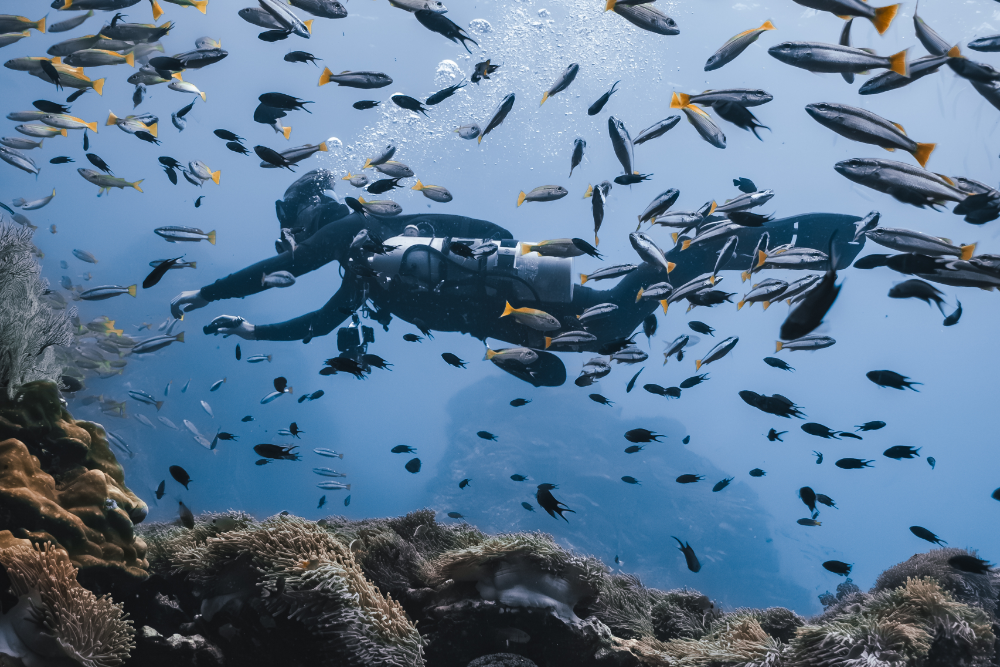
Living Blue is Big Blue Diving Khao Lak’s marine conservation, citizen science and ocean education initiative.
At its heart is one pretty simple belief: Experiencing the ocean comes with a responsibility to look after it.
Living Blue gives us a space where diving, marine research, education, citizen science and conservation can sit alongside one another – and where new ideas have room to develop.
This isn’t Big Blue suddenly deciding that we need an “eco-programme”. There will be no claims that joining us for a dive is going to save the planet. No planting coral just to make ourselves feel good. No meaningless surveys where the data ends up in a dusty folder, never to see the light of day again.
No greenwashing. No grand conservation promises. No pretending we have all the answers.
We’re a relatively small team of divers, instructors, marine biologists and general ocean nerds. But we spend a ridiculous amount of time in the water, we know this area extremely well, and we’re in a pretty useful position to contribute.
Living Blue is about making better use of that position.
An Idea That Had Been Growing for a While
The idea behind Living Blue started long before we had a name for it.
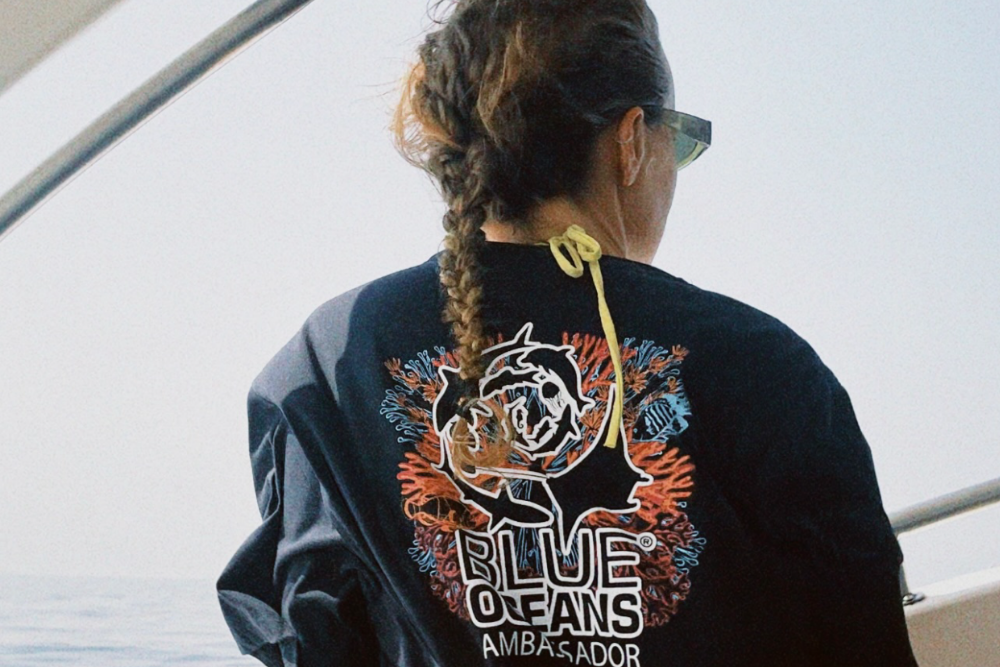
Boots and Ric had talked for years about creating a platform within Big Blue where people with good environmental ideas could find the support to actually do something with them.
Not a conservation project built around one person.
Not twenty different eco-programmes or specialty courses created because they look good on a website.
Just space for good ideas to grow.
And, slowly, that’s exactly what happened.
Big Blue team members have contributed to citizen science and manta research for years. Lueng Ric has more than twenty years of knowledge of these waters and has watched encounters with manta rays at some of his favourite dive sites become less frequent over time. Our instructors have introduced thousands of people to the underwater world. We’ve supported conservation projects, worked alongside local organisations and spent decades getting to know the Similan and Surin Islands.
Then came Andaman Turtle Watch.
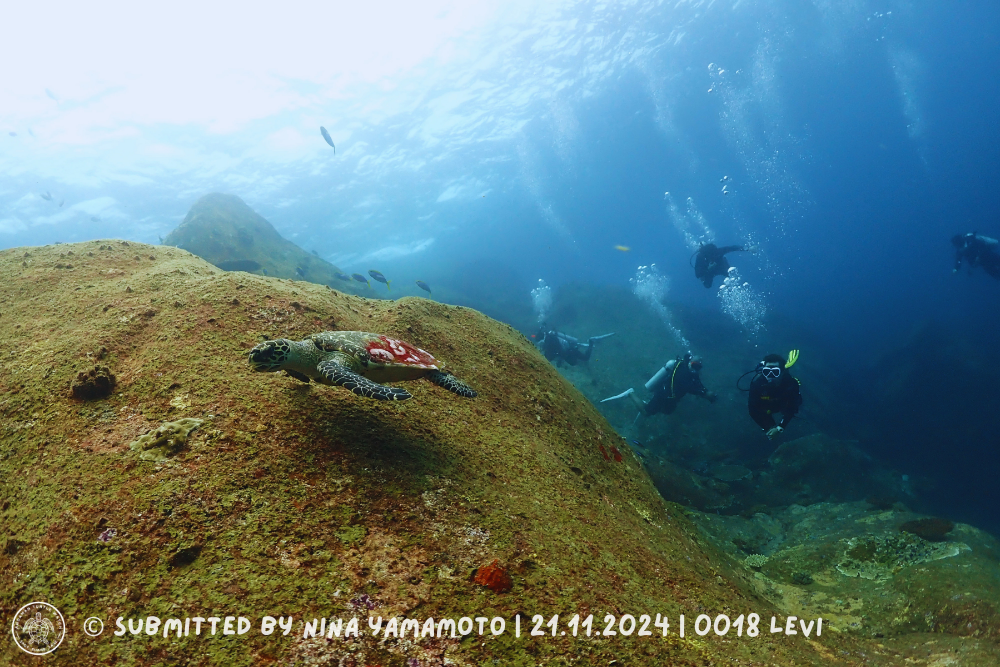
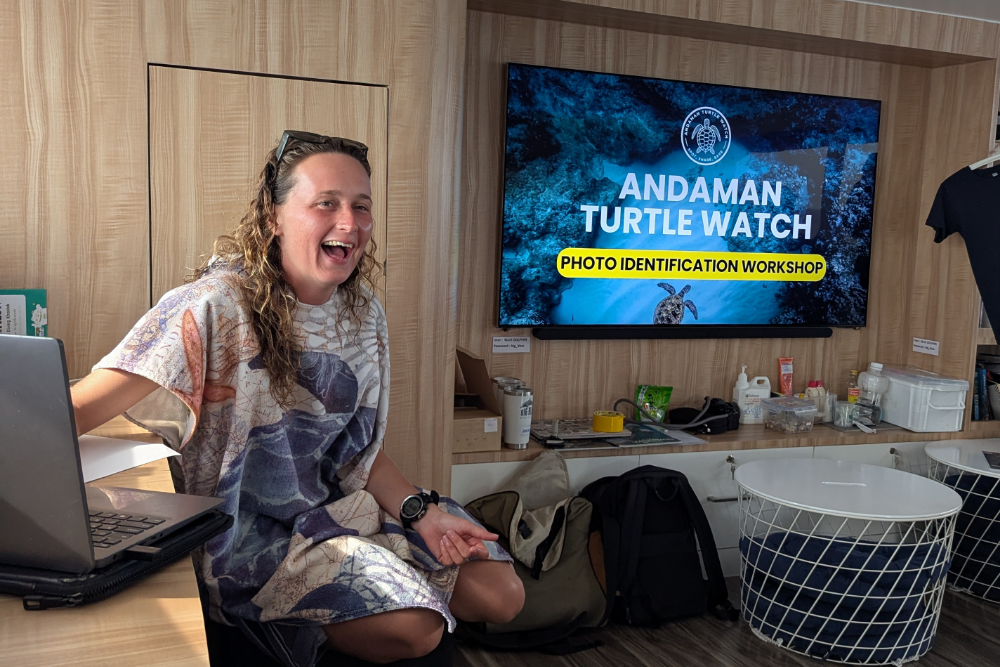
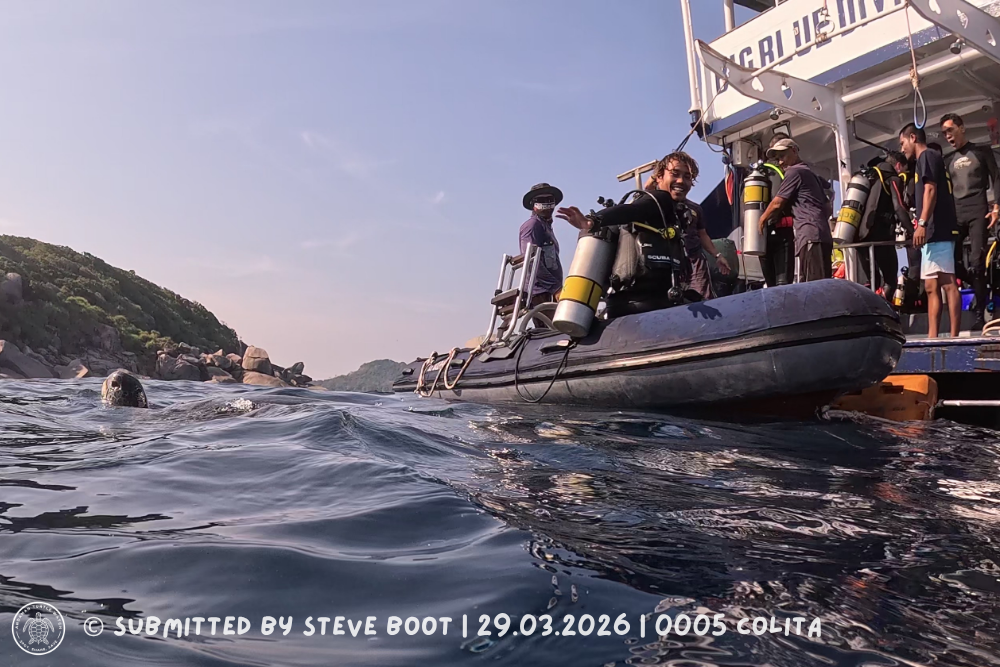
Founded in 2024 by our now Resident Marine Biologist, Eve, Andaman Turtle Watch uses photographs contributed by divers, snorkellers, guides and marine businesses to identify and monitor individual sea turtles throughout the Andaman region.
Big Blue became involved almost immediately. One turtle sighting became ten. Ten became hundreds. And those sightings started becoming something much more useful.
Our team began recognising individual turtles. Guests became citizen scientists.
New research started finding its way directly onto our boats, giving customers access to emerging local data, individual turtle histories and stories from the reefs they’d just been diving. Conversations turned into Turtle Ecology courses, dedicated conservation liveaboards and new ways for everyday divers to contribute useful data.
Behind the scenes, the wider Big Blue team helped turn increasingly ambitious ideas into things that could actually work.
And the secret’s out – our dive instructors and Divemasters have some pretty unexpected hidden talents. Alex, one of our divemasters, brought his tech experience into the mix and began developing a dedicated Photo-ID system to support Big Blue’s contribution to Andaman Turtle Watch, helping us explore better ways to process, compare and manage an ever-growing collection of turtle photographs.
Different people started bringing different skills to the table. Somewhere along the way, it became obvious these things didn’t need to exist as disconnected side projects.
Living Blue had started taking shape.
→ Meet Andaman Turtle Watch here.
→Follow Andaman Turtle Watch on Facebook
A New Chapter
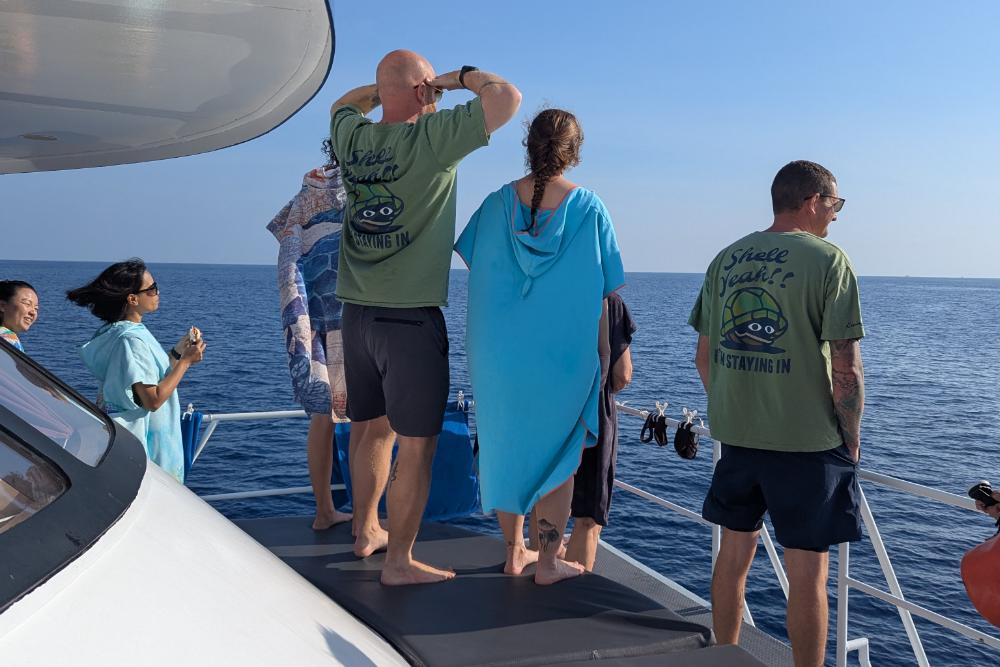
Turtles weren’t the beginning of conservation or citizen science at Big Blue. But they have become a pretty important catalyst for this new chapter. After years of watching the marine environment change – and seeing encounters with animals like manta rays become less frequent at familiar sites – it’s fair to say conservation can sometimes feel frustrating.
Andaman Turtle Watch reminded us of something important: There are still things we can actually do.
We can collect useful data, share what we see and use the thousands of hours our team and customers spend underwater to help researchers understand these places better. And we can get other people excited about doing the same.
Sea turtles are now the flagship of Living Blue because that’s where some of our strongest active research, partnerships and expertise currently sit.
And we’re absolutely fine with that.
We don’t want hundreds of conservation programmes just so we can say that we do. We’d rather do fewer things properly.
Our work with Andaman Turtle Watch now connects recreational diving with long-term Photo-ID research, citizen science, ecology education and conservation-focused dive trips.
Last season, that work also led somewhere we hadn’t really expected.
Into schools.
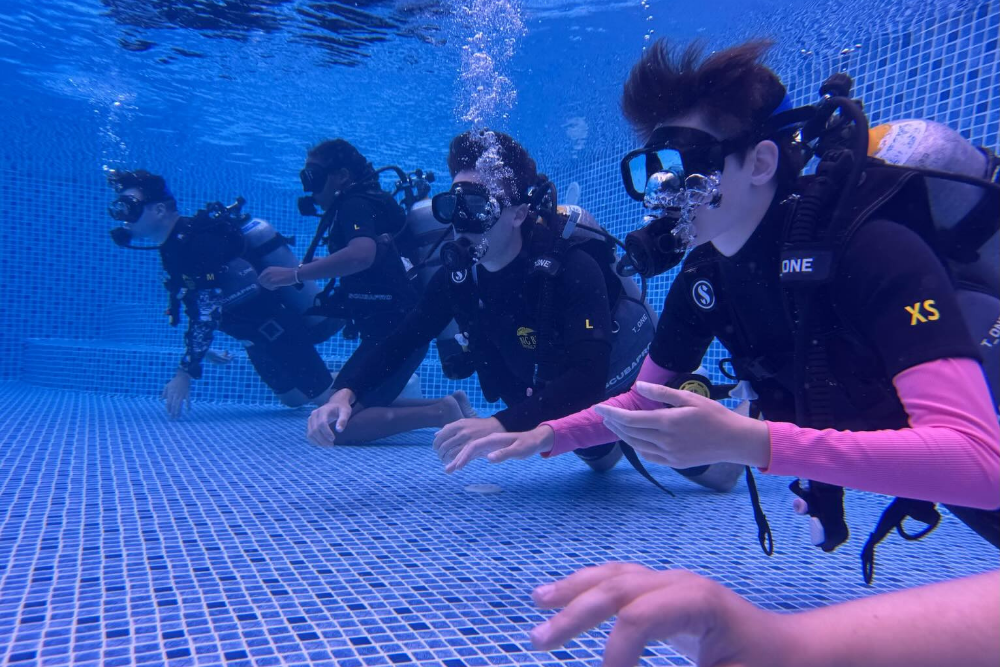
More than 200 international students joined Big Blue through our new Ocean Education programmes, combining snorkelling or scuba diving with turtle ecology, citizen science and first-hand exposure to local conservation projects.
If we want healthier oceans in the future, education has to be part of the picture. Today’s students will become the scientists, conservationists, dive professionals, policymakers, travellers and ocean advocates making decisions about them. Ocean Education has since become another major pillar of Living Blue – and it deserves a story of its own.
→ Read about our Living Blue Ocean Education programme here.
But Living Blue doesn’t stop with turtles and schools.
Big Blue’s connection with manta ray citizen science stretches back years, and we’re looking at how that experience could develop into future research-focused trips and education.
We’re exploring new opportunities around shark citizen science.
And we’re also looking closer to home…
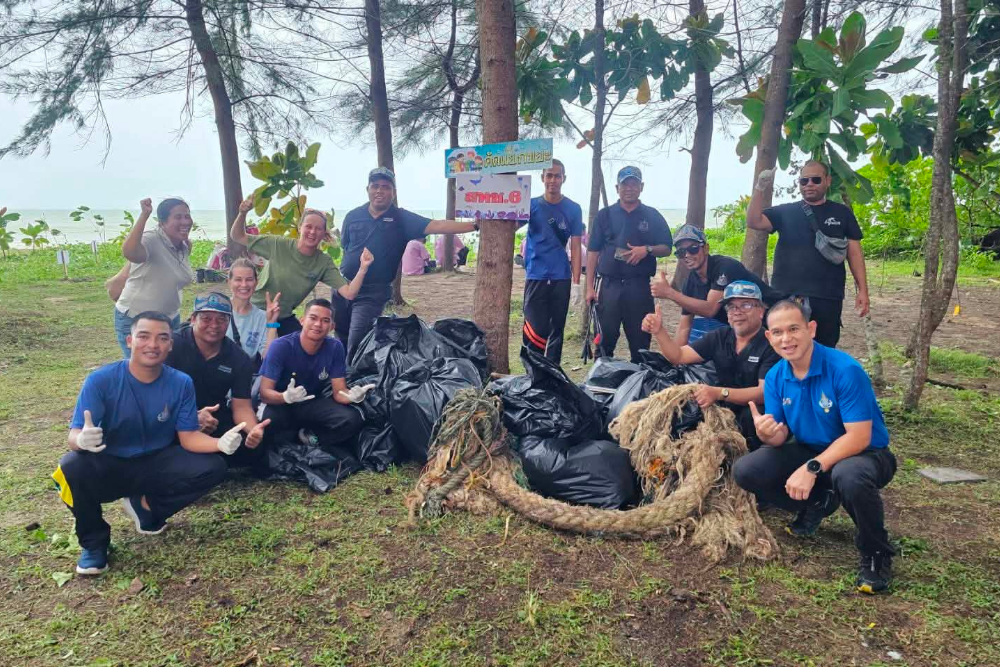
Looking After the People Behind the Diving
Sustainability isn’t only about what happens underwater.
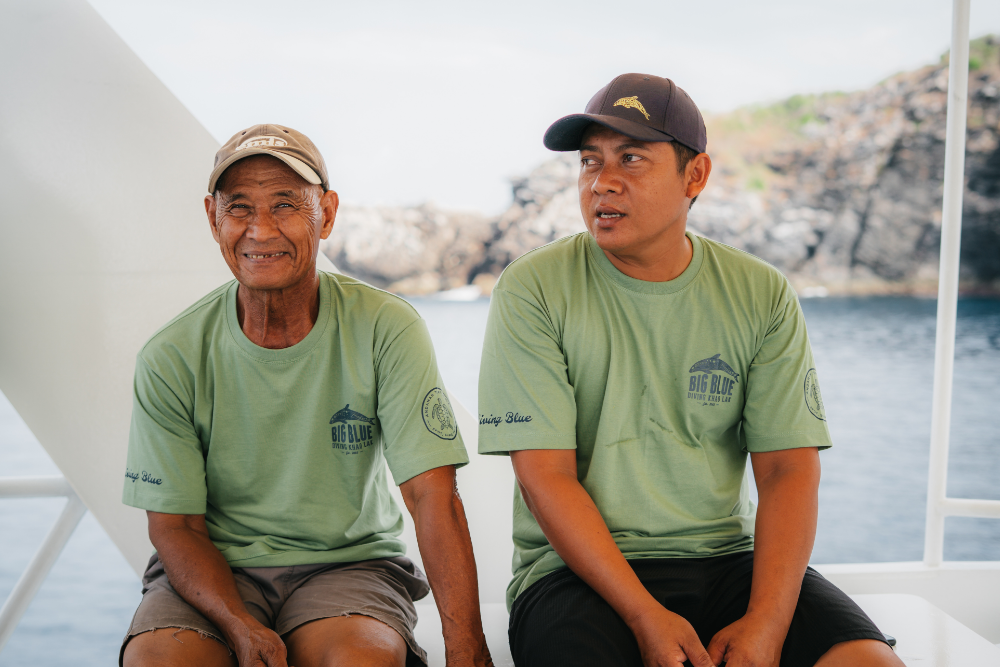
A dive centre relies on a huge amount of work customers rarely see. Behind every tank waiting on a boat is a team filling, moving, maintaining and inspecting equipment to make sure divers can enter the water safely. It’s physically demanding, highly responsible work – and a part of the dive industry that doesn’t always receive the recognition or structured professional development it deserves.
That’s why another strand of Living Blue is focused on our Tank Team.
Working with SSI, we’re developing a Tank Team training and certification programme designed to formally recognise these skills, strengthen safety and operational standards, and create clearer opportunities for training and professional development. The ambition goes beyond Big Blue. We’re working with SSI at a national level to explore how this kind of recognition could better support Tank Teams elsewhere in Thailand too.
It’s a different kind of sustainability project. No turtles involved. But that’s exactly the point.
Living Blue isn’t only about creating conservation experiences for our customers. It’s also about looking critically at how we operate, the people who make those experiences possible, and where we have opportunities to do things better.
So, What’s Next?
We don’t have a giant five-year list of conservation projects ready to announce.
Deliberately.
Living Blue isn’t a finished thing. It’s a direction.
We’ll keep building around the things we genuinely know something about, while working with researchers, government organisations, NGOs, local communities and other people who know things we don’t. We’ll keep exploring how recreational diving can contribute useful observations and data, while continuing to develop Ocean Education and ecology courses. And we’ll leave room for curiosity.
Maybe somebody on the team has a research question they can’t stop thinking about. Maybe Farm’s fascination with clown triggerfish turns into a Photo-ID idea. Maybe it’s useful to an existing researcher. Maybe it isn’t.
That’s part of the process. Living Blue gives us somewhere to ask the question, find the right people and see whether an idea has legs. Or fins.
Some projects will grow. Some ideas might not work. We’ll learn from both.
That’s how this started in the first place.
Why We Do It
Ultimately, the philosophy behind Living Blue isn’t particularly complicated.
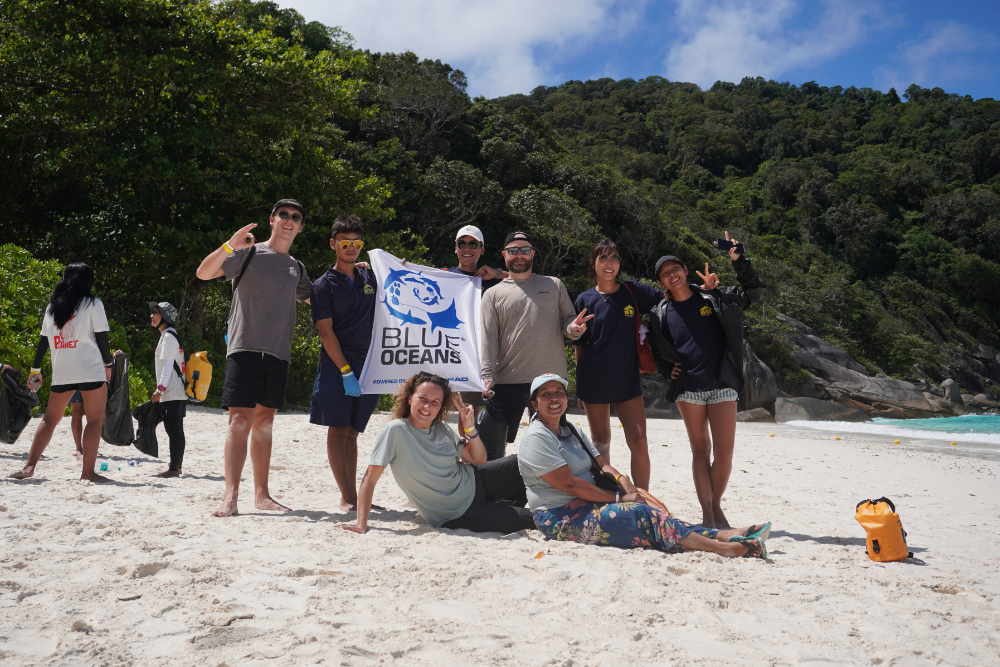
We’re ocean people.
We spend more time underwater than most people spend outdoors. We see the reefs change. We recognise turtles. We get ridiculously excited when an old manta turns up again. We notice when something isn’t right too – when coral starts bleaching, when an algal bloom appears across a reef, or when an animal we used to encounter regularly suddenly isn’t around so often. This is our workplace, our playground and, for many of us, the reason we ended up living on this side of the world in the first place.
So we’re going to keep running great dive trips. We’re going to keep teaching people to dive well. But where we have the knowledge, partnerships and opportunity to do something useful alongside that, we’re going to do that too!
That’s Living Blue.
And we’re only just getting started.
→ Explore Living Blue and discover how you can get involved.
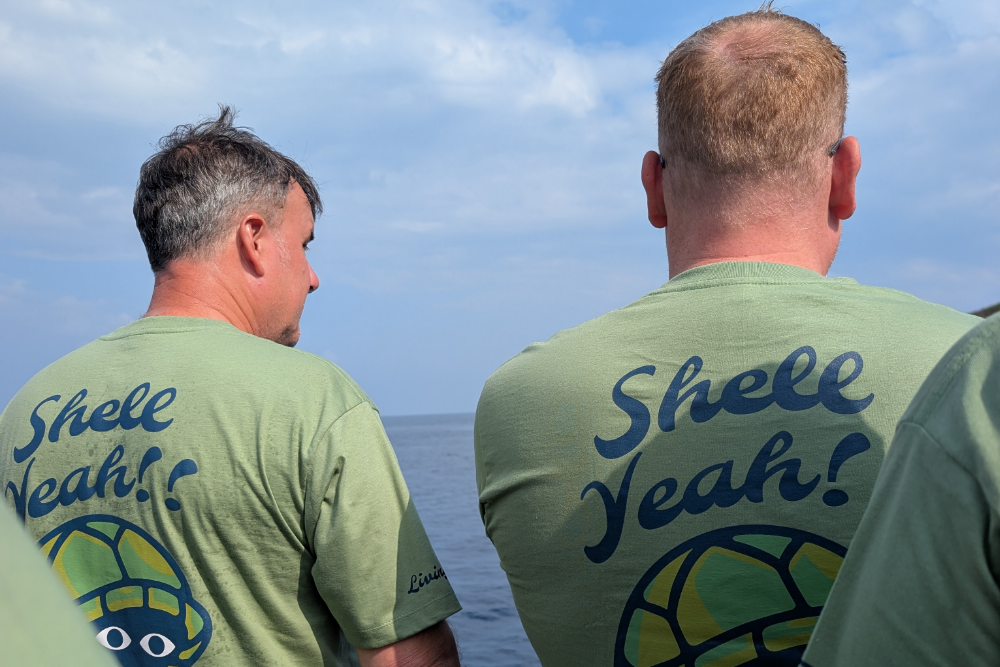
Shell Yeah. 🐢