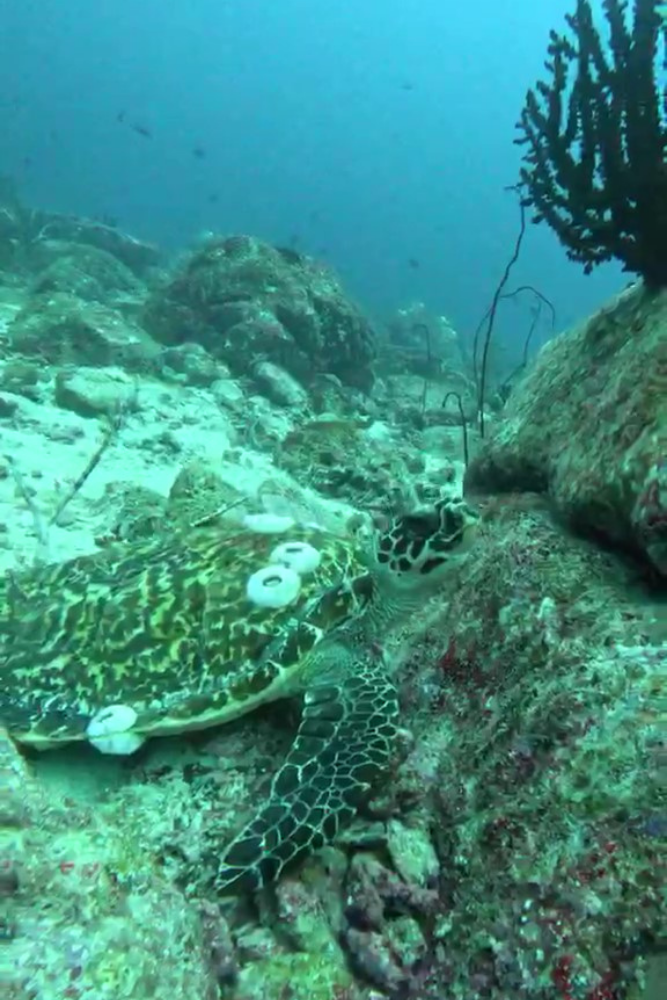
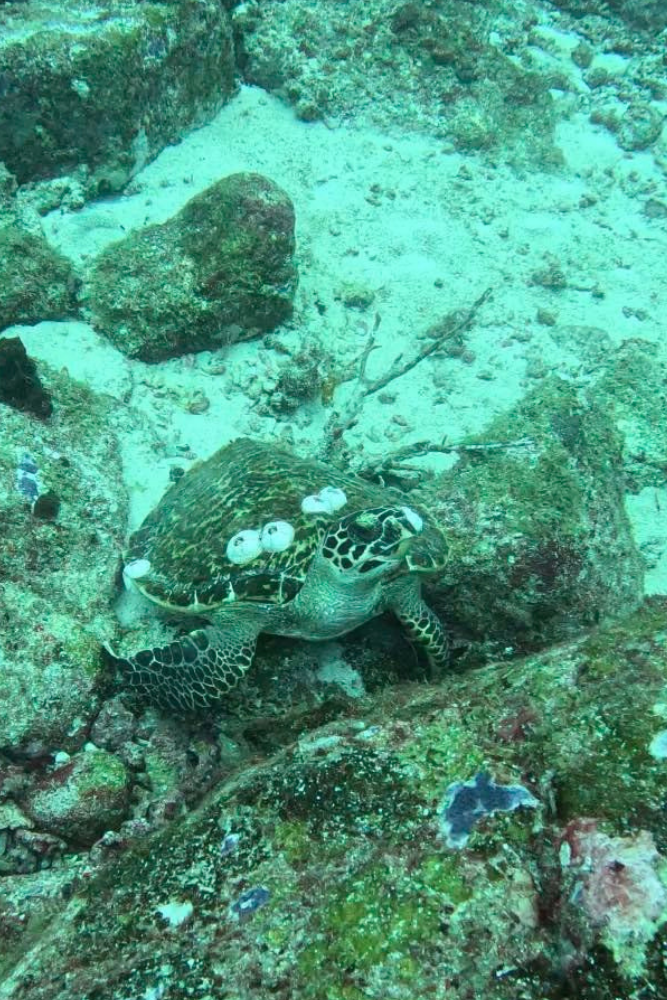
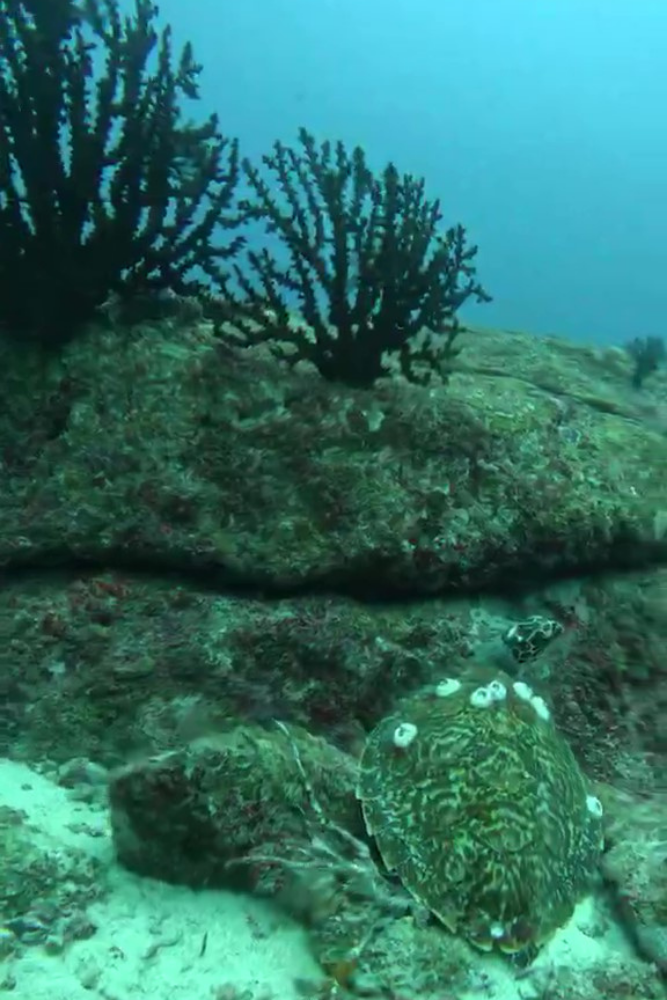
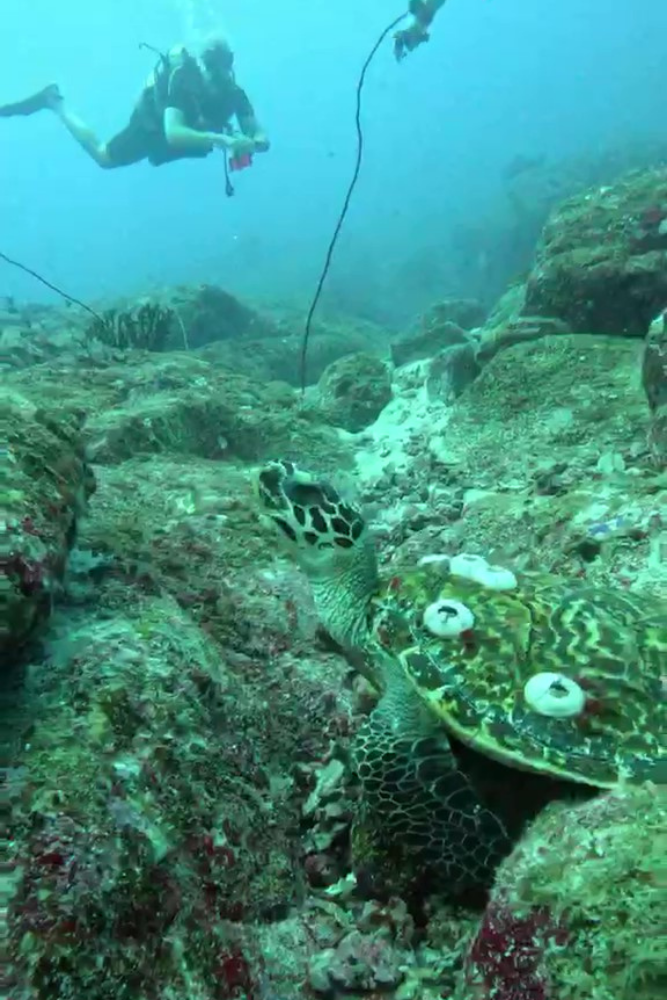
Barney’s story is a interesting one. This sub-adult hawksbill turtle is recorded just once at Boulder City by Sam Hunt, and earned the name “Barney” thanks to the many barnacles hitching a ride on their shell.
So, do barnacles hurt turtles? Not usually. Barnacles are epibionts – organisms that live on the surface of another without directly harming it. They attach to the hard surface of a turtle’s shell, giving them a safe place to live, filter feed on plankton, and reproduce.
A heavy barnacle load can indicate that a turtle is inactive or spends more time in shallow or calm waters, possibly due to illness, injury, or foraging habits. Scientists study these epibionts to learn about turtle behaviour, feeding patterns, and migration – small clues that help piece together the mysteries of a sea turtle’s life cycle.
In Barney’s case, their barnacle covering was moderate and poses no cause for concern. Since barnacles naturally fall off or relocate, it’s a temporary feature rather than a permanent ID marker.
Barney hasn’t been recorded again in the Andaman Turtle Watch database – possibly because Boulder City is a less-visited dive site – but we can’t wait to spot them in the future…and see just how many (or few!) barnacles they’re sporting next time.
Other Photos Of Barney
Proud Partners in Sea Turtle Conservation
This turtley awesome data is provided by Andaman Turtle Watch (ATW).
Updated 29 August 2025
Since October 2024, ATW has partnered with Big Blue Diving Khao Lak – the leading contributor of sea turtle sightings in the Andaman Sea. Big Blue’s team routinely photographs and reports turtles, playing a vital role in helping ATW monitor and protect them.
Learn more on our ATW info page, join the Facebook group, or contact Eve at andamanturtlewatch@gmail.com.