The power of citizen science, photo identification, and collaboration
A New Year’s message from Eve Pilmore, Founder of Andaman Turtle Watch – the Andaman Sea’s first public-facing sea turtle photo-identification database
As 2025 draws to a close, it feels like the perfect moment to pause, take a breath, and reflect on what has been an extraordinary year for sea turtle conservation – and for the growing partnership between Andaman Turtle Watch and Big Blue Diving Khao Lak.
For Andaman Turtle Watch, this milestone is especially meaningful. Launched in October 2024, 2025 marks our first full calendar year in operation. It has been a year of steep learning curves, countless hours analysing sea turtle footage, and building the region’s first public turtle ID database from scratch.
None of this would have been possible without the unwavering support of Big Blue Diving Khao Lak.
This blog celebrates what happens when a dive centre doesn’t just talk about conservation, but actively embeds it into everyday operations – on the boats, underwater, in the classroom, and behind the scenes. Big Blue’s contribution over the past year has been nothing short of exceptional, and the data now speaks for itself.
And importantly: this is only the beginning.
Big Blue: Leading the Way in Citizen Science
As we close the 2025 chapter, Big Blue Diving Khao Lak remains the single largest contributor of citizen science data to Andaman Turtle Watch.
Across the Andaman Sea, ATW now holds 451 verified sea turtle sightings – a number that continues to grow as new data arrives and historic footage is analysed. Every submission represents a vital piece of the puzzle needed to better understand, and ultimately protect, sea turtles in this region.
Of those 451 submissions, 117 have come from Big Blue alone.
Considering Big Blue operates with a small but highly focused team, with one liveaboard, and one speedboat, this is a remarkable achievement. Since day one, Big Blue has consistently held:
- Top contributing dive centre – 117 sightings and counting
- Top individual citizen scientist – Hats off to Sam Hunt with 42 sightings, 16 turtles named, 25 different individuals recorded
- Highest number of unique turtles encountered by any dive centre – 46 unique individuals
- Most new turtles named – 36 of the 92 named turtles in the ATW database
This level of contribution is not accidental. It reflects a team culture where conservation is part of the dive briefing, the surface-interval conversation, and team meetings.
Check out the first mini documentary showcasing the work of Andaman Turtle Watch and Big Blue Diving – highlighting the power of citizen science and our shared goals for the future.
Big Blue in 2025: The Numbers That Matter
Looking specifically at 2025 data, Big Blue recorded:
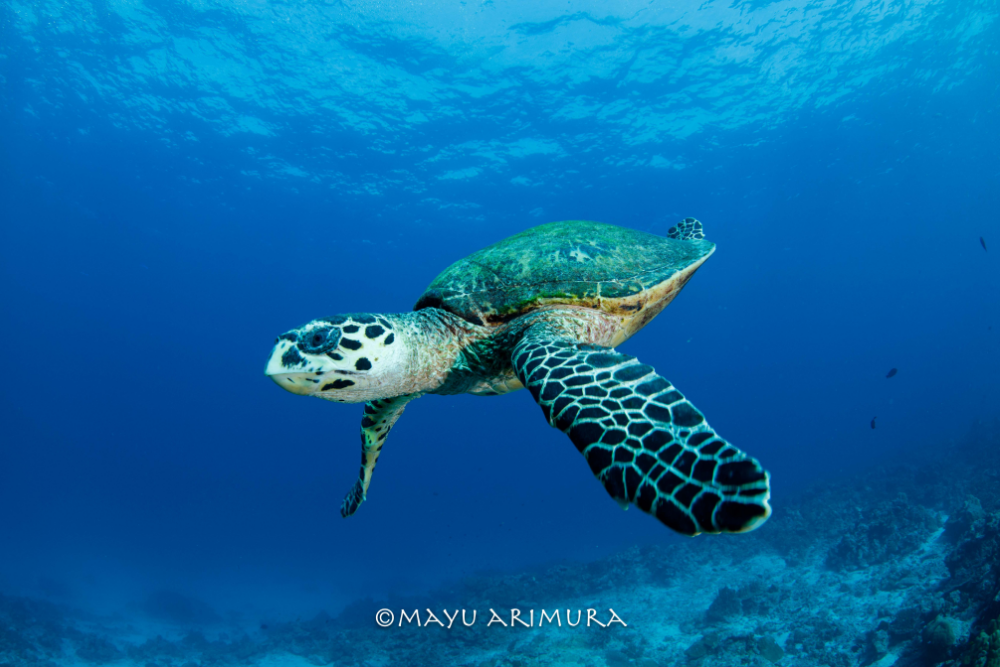
- 96 verified submissions – 85 Hawksbill and 11 Green turtle sightings
- 45 unique individual turtles observed – 40 with complete photo ID (both sides of the face) and 5 new individuals with only one side captured (awaiting full identification)
- 21 turtles newly named
- 64 recapture submissions
While naming turtles helps people connect emotionally to conservation, it is the recapture data – repeat sightings of known individuals over time – that carries the greatest scientific value.
These recaptures allow us to assess site fidelity, movement patterns, habitat use, behavioural trends, and long-term residency. Recording 64 recaptures in a single year is an outstanding contribution to our understanding of Andaman Sea turtles.
It is also worth remembering that the Andaman dive season runs for roughly six months of the year. For half the year, boats are out of the water. What Big Blue has achieved within that limited window is exceptional.
Beyond Numbers: Why Big Blue’s Data Is So Valuable
The real strength of Big Blue’s contribution lies not only in how much data was collected, but in what kind of data was recorded.
Feeding Behaviour: Filling Critical Knowledge Gaps
In 2025, Big Blue recorded 52 instances of feeding behaviour.
While sea turtle diets are well documented globally, regional feeding ecology in the Andaman Sea remains poorly understood. Without knowing what turtles are feeding on, where, and when, effective protection is impossible.
This data allows us to:
- Identify critical foraging habitats
- Understand seasonal habitat use
- Support evidence-based marine management
In a region facing increasing pressure from fishing, tourism, and coastal development, targeted protection of biologically important sites is essential.
Notably, Big Blue divers recorded:
The first documented case in the ATW database of Hawksbill turtles feeding on feather stars
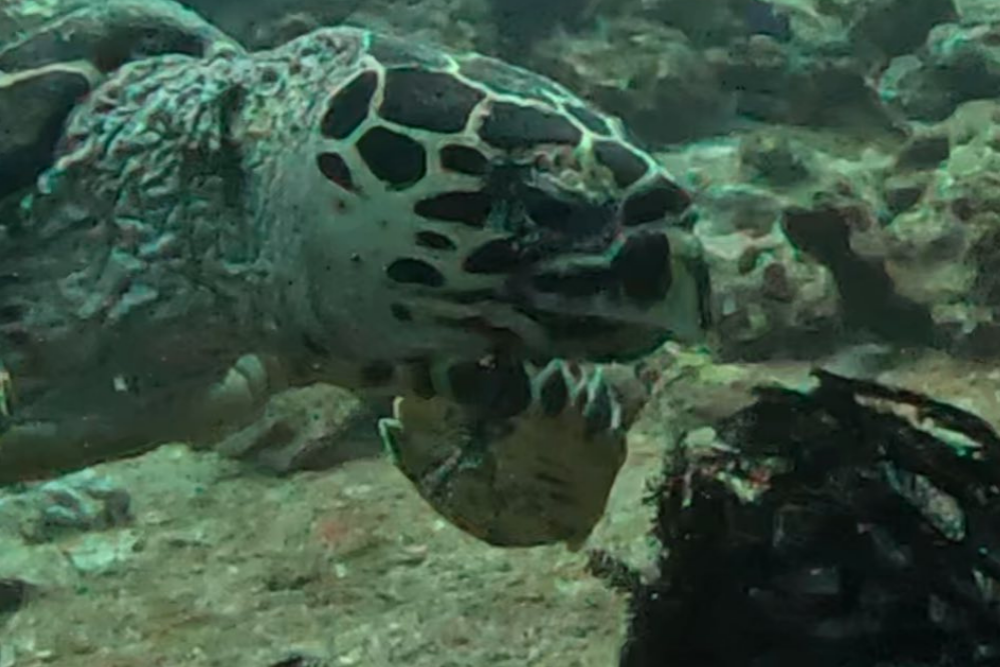
The first documented case in the Andaman Turtle Watch Database of Hawksbill turtles feeding on anemones
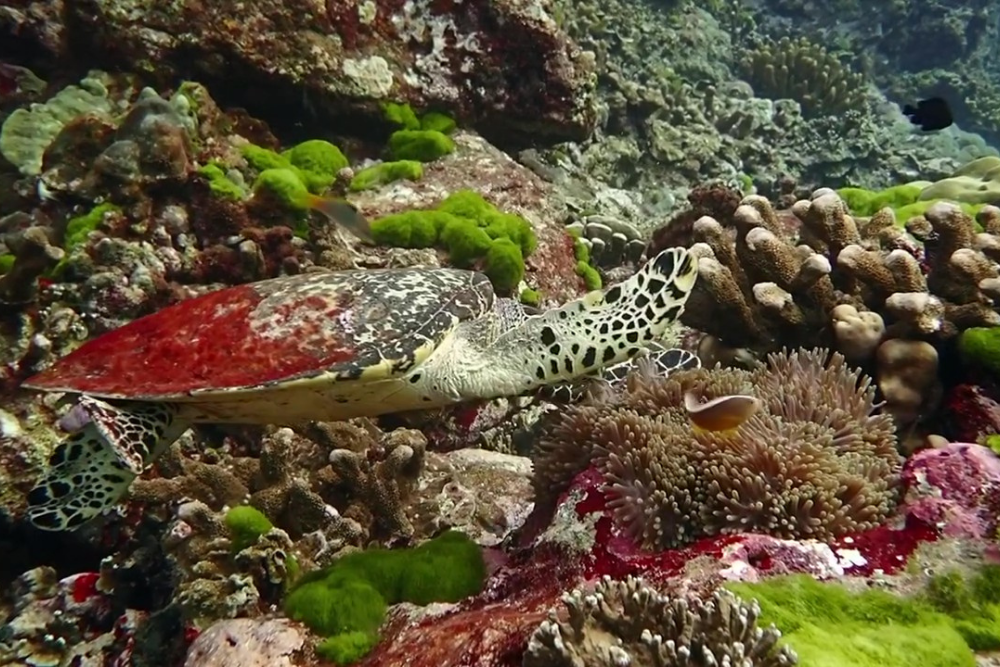
And yes – some very entertaining videos of turtles feeding in strong current. Less scientific, but excellent viewing.
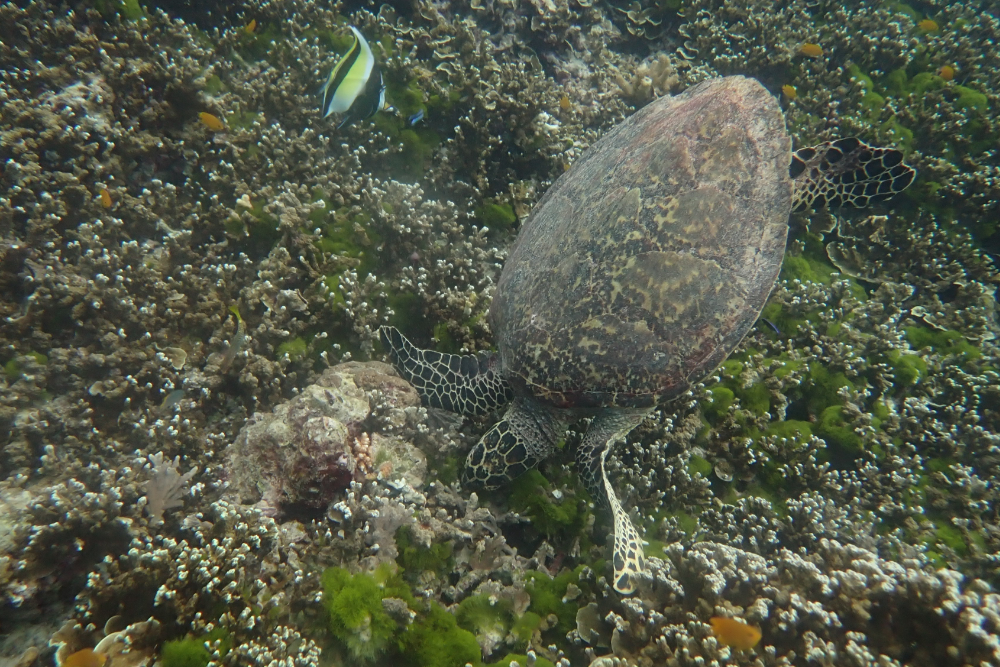
These observations highlight how much we still have to learn, and why consistent, high-quality citizen science matters.
Social Interactions: Rare and Remarkable Observations
Sea turtle social behaviour remains understudied globally, and even more so in the Andaman Sea.
In 2025, Big Blue recorded:
- 11 confirmed social interaction events
- The first-ever ATW record of three sea turtles interacting within the same foraging area
These sightings significantly increase the ecological importance of specific dive sites. Knowing that multiple turtles forage in close proximity elevates these reefs as priority habitats for monitoring and protection.
One particularly powerful example occurred when multiple dive groups surfaced believing they had all seen the same turtle – only for photo identification to reveal four different individuals recorded on a single dive.
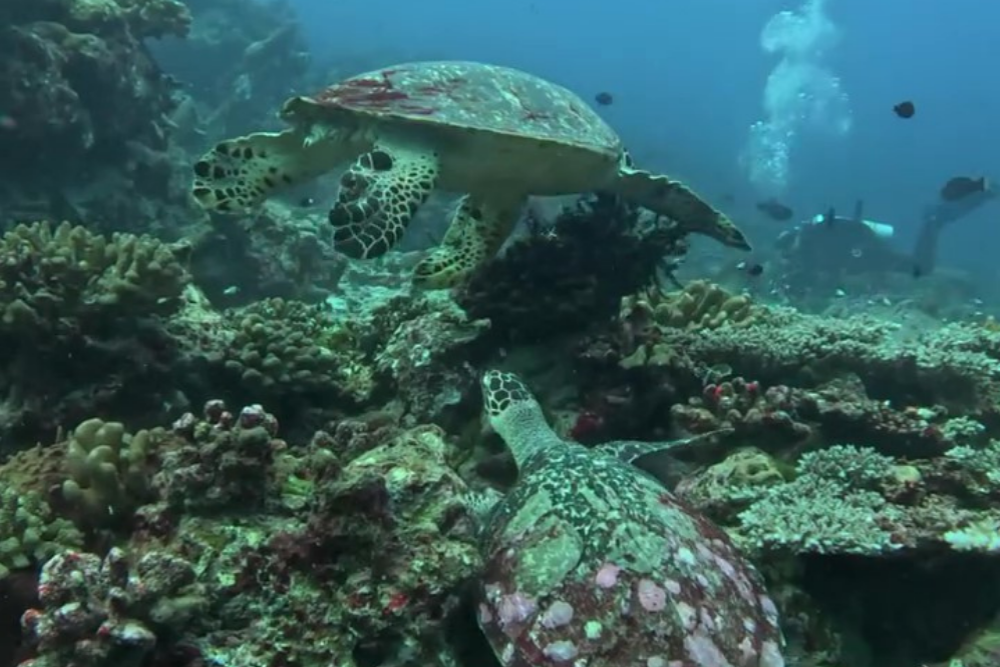
This is citizen science at its best: More eyes in the water = more data = more knowledge.
Big Blue Exclusives
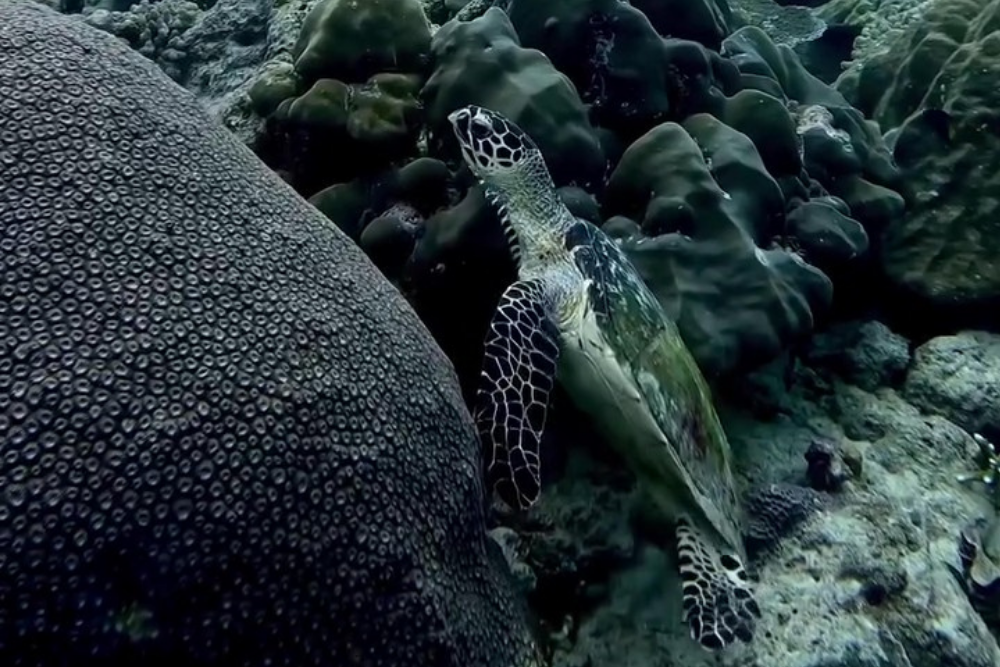
One of the most striking outcomes of 2025 is this: twelve fully identified turtles in the ATW database have only ever been recorded by Big Blue divers.
Without Big Blue’s contributions, these individuals would remain unknown, unmonitored, and effectively invisible to conservation efforts.
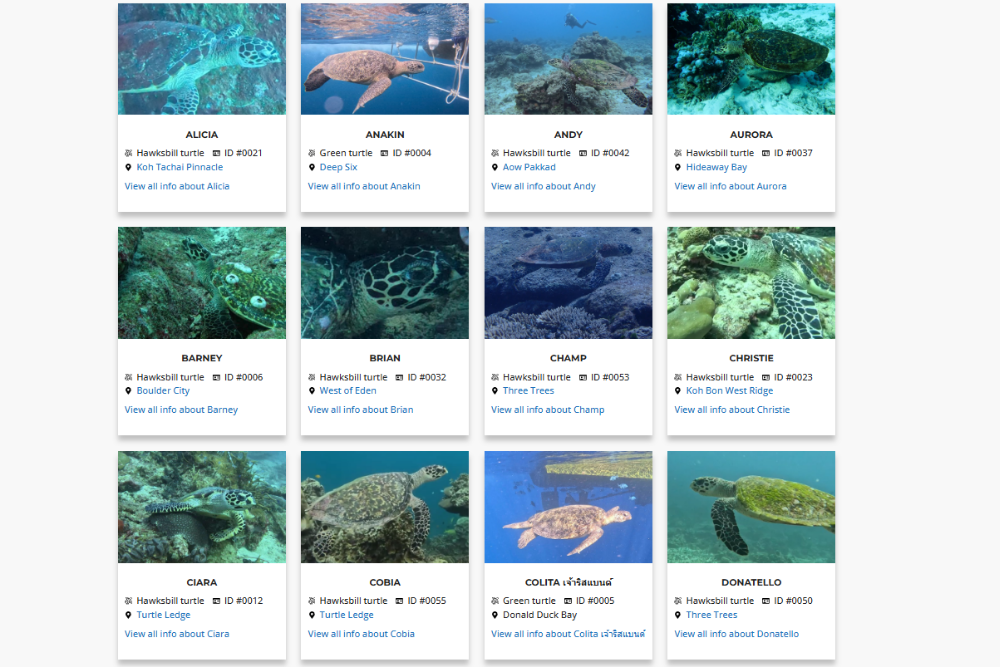
Those turtles are: 0006 Barney, 0023 Christie, 0036 Leah, 0037 Aurora, 0055 Cobia, 0056 Lydia, 0066 Jess, 0080 Red Ruby, 0082 Turtlelini, 0083 Mayu, 0091 Freda
This alone demonstrates the critical role Big Blue plays in regional sea turtle conservation.
Conservation Beyond Data: Living Blue in Action
In 2025, Big Blue took conservation far beyond data submission through the launch of their Living Blue eco initiative – embedding marine conservation into everyday operations.
Turtle-Specific Liveaboards: A First for the Andaman Sea
Big Blue launched the first-ever sea turtle conservation and education liveaboards in the Andaman Sea.
Across two expeditions, 42 divers participated in:
- Sea turtle ecology workshops
- Photo-identification training
- Citizen science data collection
These trips maintain Big Blue’s high dive standards while adding real conservation impact. Divers who understand the ecosystems they visit are more likely to become long-term ocean advocates, creating ripple effects far beyond the Andaman Sea.
Interested in joining a future Turtle Trip? Book here!
Read how turtle trip one and two went here.
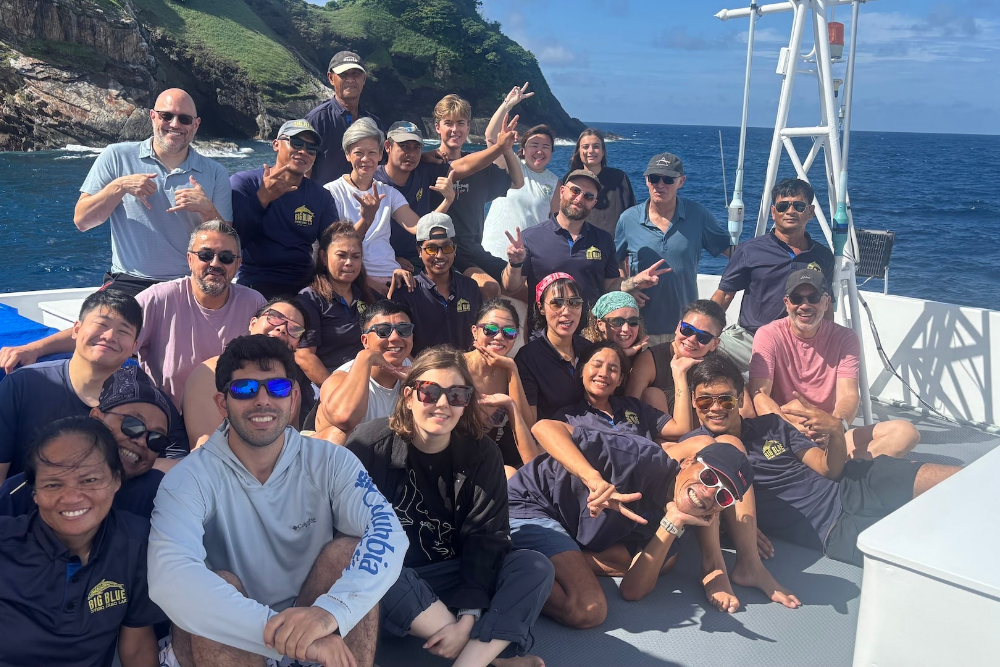
Public Turtle Database: Making Conservation Personal
Together, Big Blue and ATW launched the Andaman Sea’s first public-facing sea turtle ID database.
Big Blue now has its own public turtle profile page, where anyone can explore: individual turtle profiles; sighting histories; named turtles and their stories.
People protect what they understand. By putting names to faces and stories to turtles, we create stronger emotional connections – and stronger motivation to protect our oceans.
Explore Big Blue’s turtle profiles here.
Learn more about Big Blue’s commitment to turtle conservation here.
Conservation in Action
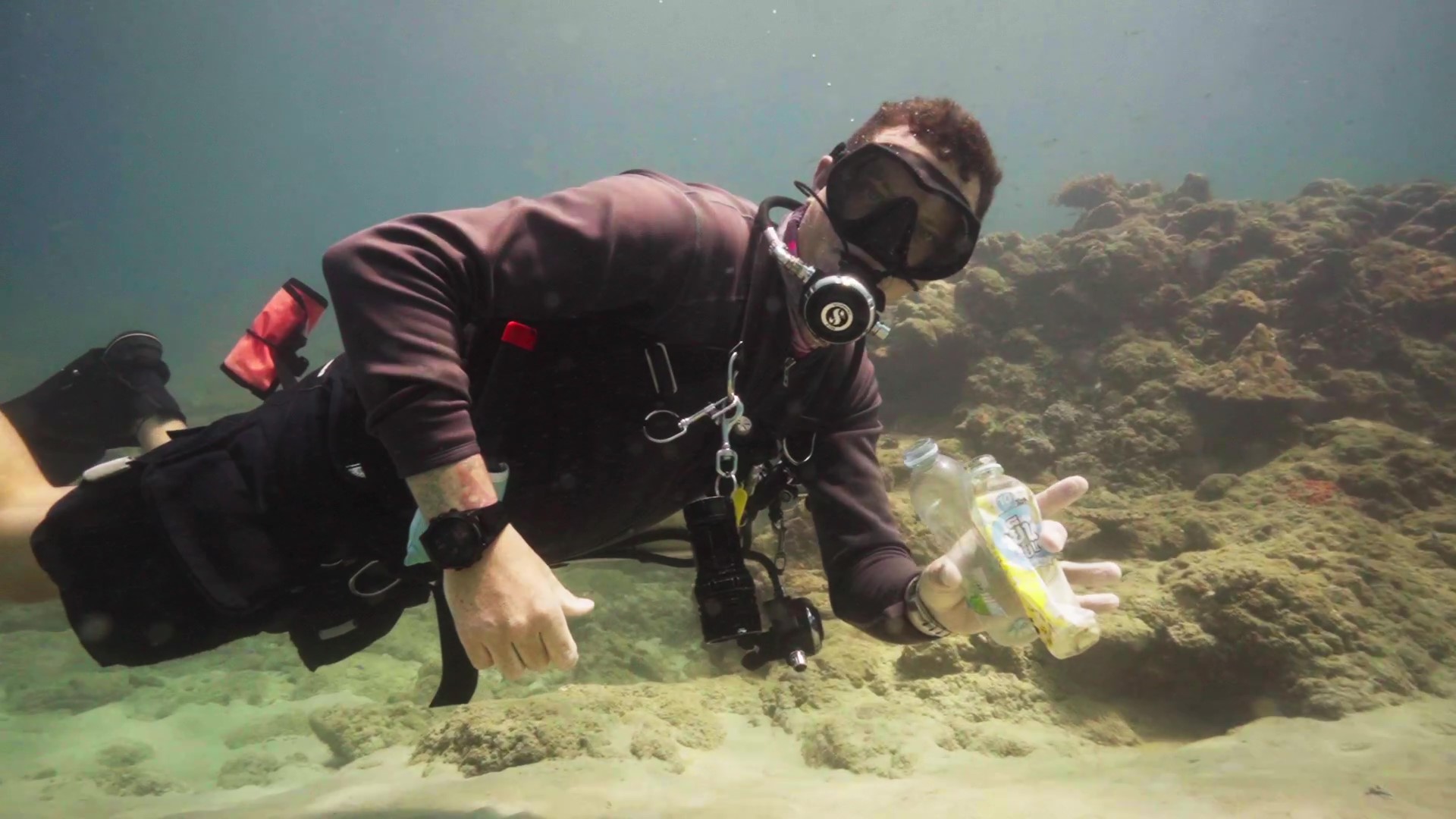
Big Blue also put action behind words through multiple clean-up events, including:
- An underwater clean-up removing 636 kg of marine debris, in collaboration with ATW, DMCR, and National Parks.
- Participation in the Phang Nga Coastal Clean-Up Challenge (1,752 kg removed)
- The Save Similan 2025 pre-season clean-up
Protecting sea turtles also means protecting the ecosystems they depend on.
Supporting National Parks and Science-Based Management
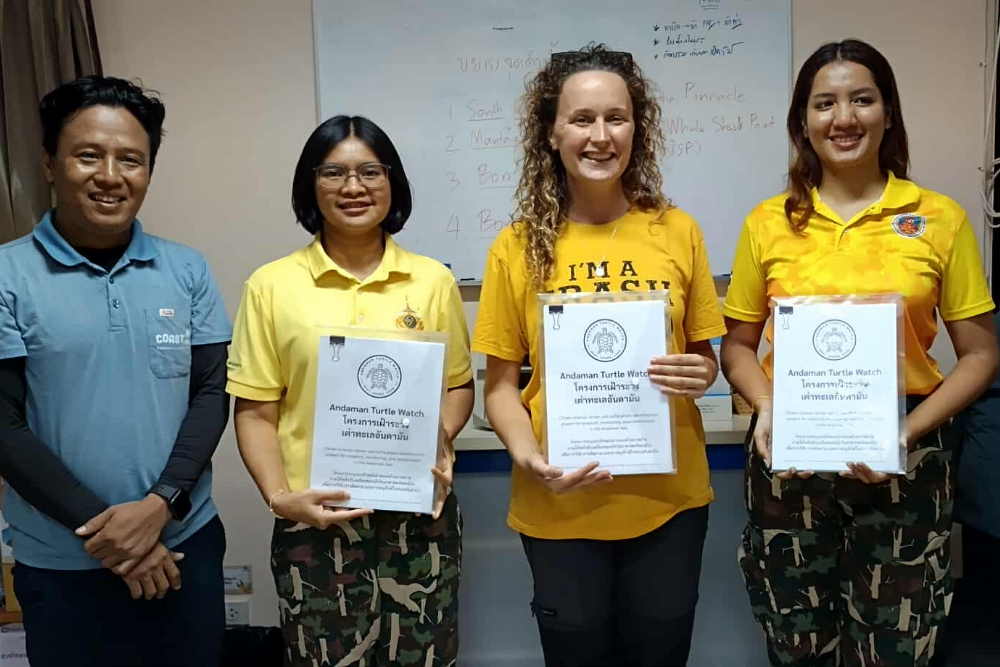
At the end of the 2024/25 dive season, Andaman Turtle Watch – supported by Big Blue – submitted an informal pilot report to Similan Islands National Park.
This report highlighted the 310 turtle sightings recorded by Andaman Turtle Watch within the park. 92 of these sightings were contributed by Big Blue. Impressively, nearly one-third of all park turtle records coming from Big Blue alone.
Citizen science and photo identification offer National Parks valuable insights that are otherwise difficult to obtain. This marks the beginning of a collaborative pathway where data directly supports park management, conservation planning, and protection measures.
We aim to deepen this collaboration with Similan and Surin National Parks in 2026.
Education: Investing in the Next Generation
Conservation starts with education!
In 2025, Big Blue hosted two international school groups alongside World Volunteering, delivering:
- Sea turtle education sessions
- Photo-ID workshops
- Snorkel and dive training
- Responsible marine tourism education
Over 100 students were trained as future ocean stewards, with more groups planned for 2026 and beyond.
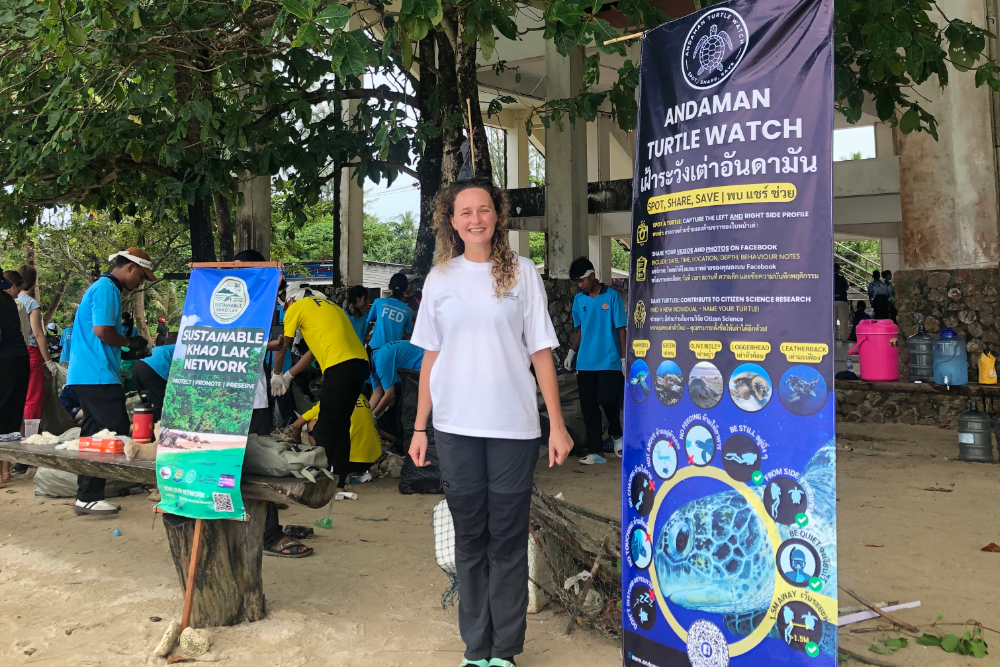
A Little Fun (But Still Serious): Turtle T-Shirts
Because conservation doesn’t always have to be serious, Big Blue and ATW launched the first “Shell Yeah” turtle t-shirt – a symbol of our shared mission and growing community of turtle heroes.

Contact the Big Blue Team to place your order. Available soon via Big Blue’s online shop.
Looking Ahead: 2026 and Beyond
Big Blue’s commitment to conservation is clear – and in 2026, Living Blue expands beyond turtles to encompass broader marine conservation leadership in Khao Lak and the Andaman Sea.
As Sir David Attenborough reminds us:
“If we save the sea, we save our world.”
In for 2026
- So many turtle sightings we forget to eat (eat, sleep, turtle ID, repeat)
- Stronger marine protection through collaboration
- Respectful wildlife encounters (minimum 3 m — always)
- Increased nesting activity
- Rare sightings (yes please, loggerheads)
- Everyone submitting turtle sightings, every time
- A challenger to Big Blue’s citizen science crown (Sam, we’re looking at you)
Out for 2026
- Feeding, touching, or chasing wild sea turtles
- Entanglement and strandings
- Single-use plastics and poor waste management
- Unsustainable coastal development
- Uncontrolled marine tourism
- “I didn’t send it because I thought you already knew that one”
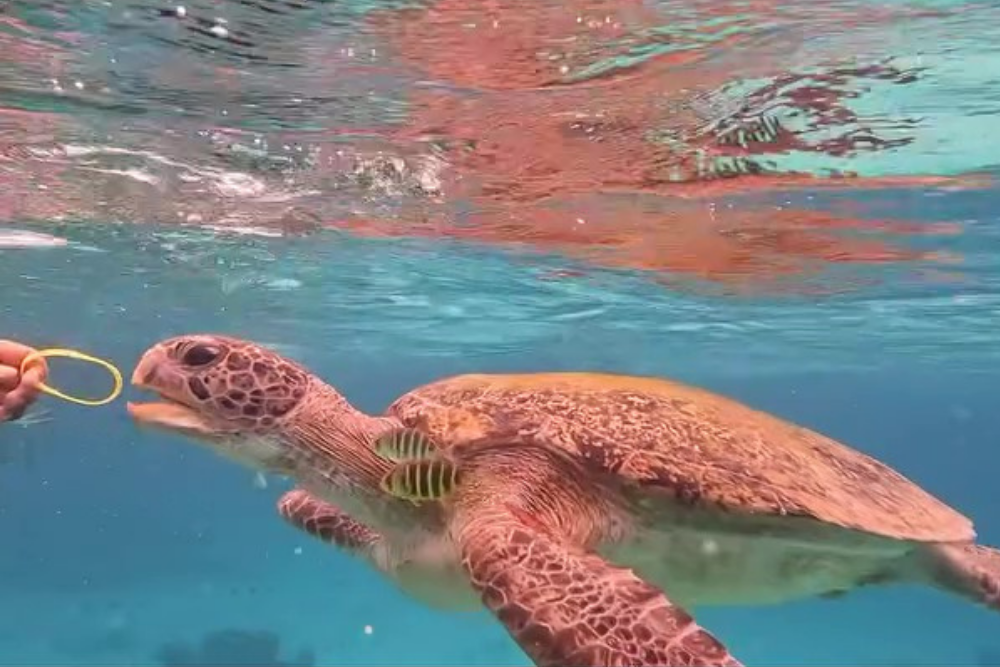
Want to Get Involved?
The 2025 calendar year may be ending, but the 25/26 dive season is in full swing, with boats filling fast and turtle sightings rolling in.
Want to dive with purpose? Book your dive with Big Blue Diving Khao Lak
Seen a turtle? Send your sightings to Andaman Turtle Watch
Want to support ongoing data analysis and project growth? Get in touch
This partnership is just getting started.
Thank you for being part of a future where marine conservation is done properly – with heart, integrity, and science.