
Gracie
Gracie is a hawksbill turtle (ID #0001) first spotted 29/02/2024. This sub adult turtle has been sighted 11 times, contributing valuable data to our Andaman Sea conservation database through the Andaman Turtle Watch partnership.
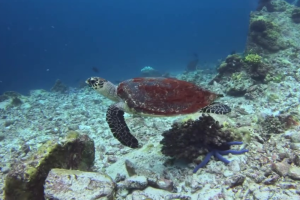
Gracie is a hawksbill turtle (ID #0001) first spotted 29/02/2024. This sub adult turtle has been sighted 11 times, contributing valuable data to our Andaman Sea conservation database through the Andaman Turtle Watch partnership.

Meet Tula, a hawksbill turtle in our Andaman Sea database. ID #0002, sub-adult, multiple sightings since May 2023. The Andaman’s first turtle photo-ID project.
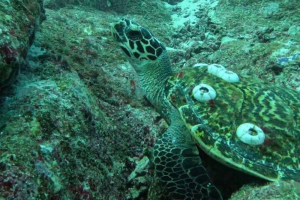
Barney is a hawksbill turtle (ID #0006) first spotted in October 2024. This sub-adult turtle has been sighted only once, contributing valuable data to our Andaman Sea conservation database through the Andaman Turtle Watch partnership.
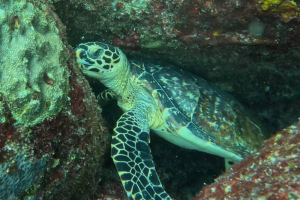
Jueng is a hawksbill turtle (ID #0059) first spotted April 2025. This sub-adult turtle has been sighted only once, contributing valuable data to our Andaman Sea conservation database through the Andaman Turtle Watch partnership.

General Grievous is a hawksbill turtle (ID #0063) first spotted in April, 2025. This adult turtle has been sighted only once, contributing valuable data to our Andaman Sea conservation database through the Andaman Turtle Watch partnership.
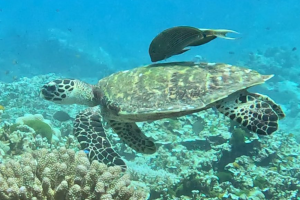
Undetermined is a hawksbill turtle (ID #0064) first spotted April 2025. This sub-adult turtle has been sighted 2 times, contributing valuable data to our Andaman Sea conservation database through the Andaman Turtle Watch partnership.
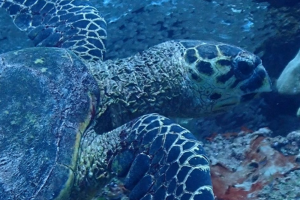
Won’t is a hawksbill turtle (ID #0065) first spotted in May 2025. This sub-adult turtle has been sighted only once, contributing valuable data to our Andaman Sea conservation database through the Andaman Turtle Watch partnership.
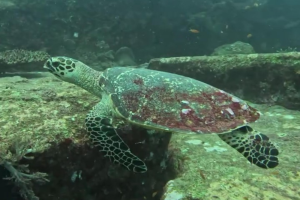
Jess is a hawksbill turtle (ID #0066) first spotted in May, 2025. This sub-adult turtle has been sighted only once, contributing valuable data to our Andaman Sea conservation database through the Andaman Turtle Watch partnership.
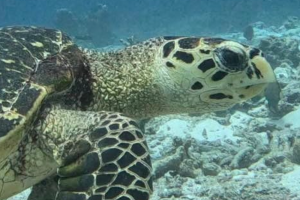
Pitchaya is a hawksbill turtle (ID #0007) first spotted October 2024. This sub-adult turtle has been sighted only once, contributing valuable data to our Andaman Sea conservation database through the Andaman Turtle Watch partnership.
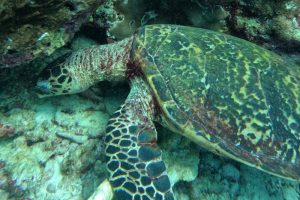
Maureen is a hawksbill turtle (ID #0008) first spotted October 2024. This sub-adult turtle has been sighted 2 times, contributing valuable data to our Andaman Sea conservation database through the Andaman Turtle Watch partnership.
The Hawksbill Turtle (Eretmochelys imbricata) is one of the world’s most distinctive and critically endangered sea turtle species. Named for their sharp, curved beak resembling a bird of prey, these remarkable marine reptiles are instantly recognizable by their stunning carapace pattern of overlapping scutes in amber, brown, and golden hues that create the famous “tortoiseshell” appearance.
Hawksbills are medium-sized sea turtles, typically measuring 60-90 cm in carapace length and weighing 40-80 kg as adults. Their flippers are proportionally longer than other sea turtle species, adapted for maneuvering through complex coral reef environments. The species plays a vital ecological role in maintaining healthy coral reef ecosystems through their specialized feeding habits.
Unfortunately, hawksbills face severe threats from habitat loss, illegal trade, climate change, and marine pollution. They are listed as Critically Endangered by the IUCN, with global populations having declined by over 80% in recent decades. Conservation efforts worldwide focus on protecting nesting beaches, reducing bycatch in fisheries, and combating the illegal trade in tortoiseshell products.
Hawksbill Turtles inhabit warm tropical and subtropical waters around the globe, showing strong site fidelity to specific foraging and nesting areas.
Environmental Conditions: Hawksbills prefer water temperatures between 20-30°C (68-86°F) and areas with good water clarity that support healthy coral reef ecosystems. Nesting beaches require specific conditions including appropriate sand temperature, minimal artificial lighting, and protection from predators and human disturbance.
Found in the Atlantic, Pacific, and Indian Oceans, with major populations in the Caribbean, Pacific islands, Southeast Asia, and the Red Sea. Key nesting regions include the Caribbean, Seychelles, Australia’s Great Barrier Reef, and scattered Pacific islands.
Hawksbill Turtles are highly specialized feeders with dietary preferences that change significantly as they mature.
Adult hawksbills are among the most specialized feeders in the sea turtle family, with their diet consisting primarily of sponges. Their sharp, pointed beak allows them to reach into small crevices and extract sponges from coral reef surfaces. This feeding behavior is crucial for reef health, as hawksbills help control sponge populations that might otherwise overgrow and smother corals.
They are selective feeders, often consuming sponges that are toxic to other marine animals. Their digestive system has adapted to process these chemically defended organisms safely. Hawksbills typically forage during daylight hours, using their excellent vision to locate preferred prey items within the complex three-dimensional structure of coral reefs.
Nesting Behaviour:
Mating occurs in shallow waters near nesting beaches during the breeding season. After mating, females come ashore at night to dig nests in sandy beaches above the high tide line. Each nest contains 100-200 ping-pong ball-sized eggs that are buried approximately 40-60 cm deep in the sand.
Incubation and Development: The incubation period lasts 52-74 days, depending on sand temperature. Like other reptiles, sex determination is temperature-dependent, with warmer temperatures producing more females. Hatchlings emerge at night and use natural light cues to find the ocean.