
Big Blue Dive Site Guide
Three Trees
Day Trip Diving
Our Similan diving day trips will resume in November 2025
Liveaboard Diving
Location
Similan Island 9
Skill Level
All levels
Depth
7-30m plus
Currents
Weak to Strong
Topography
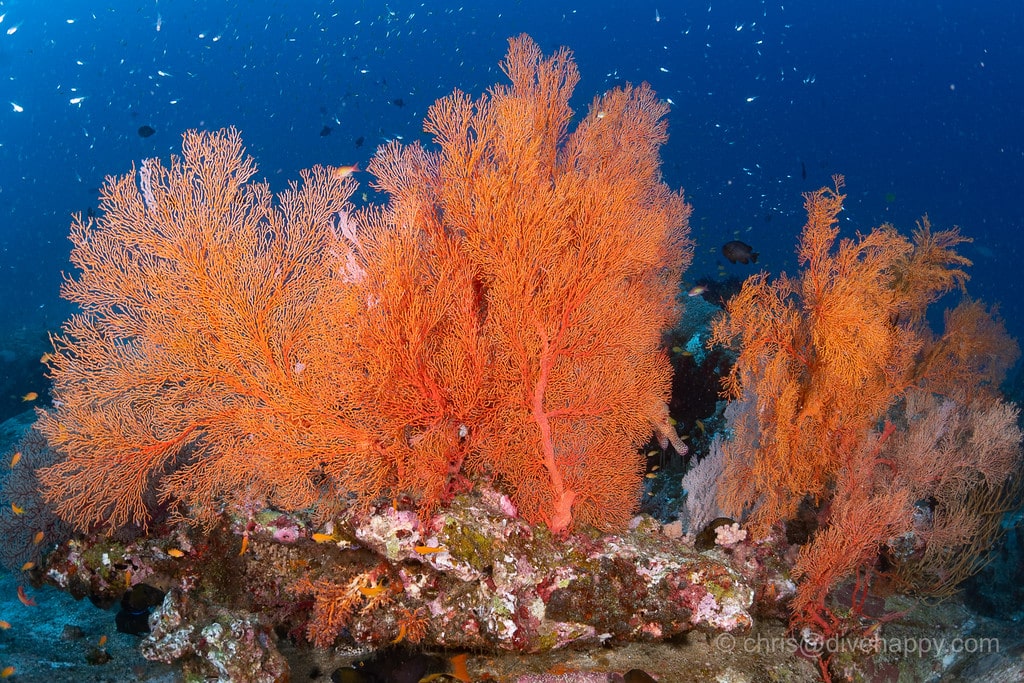
Shallow fringing and sloping coral reef with large granite boulders in the deeper sandy areas. Abundant hard corals and sea whips with soft corals and sea fans adorning the granite boulders.
Highlights
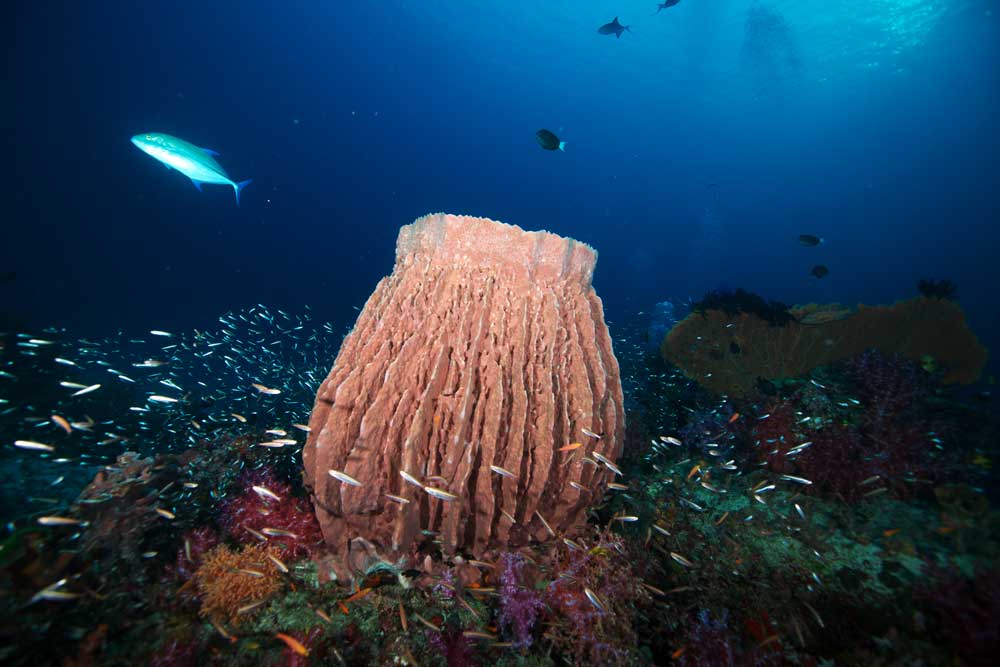
Swimming over the reef and out over the sand you will come to three huge granite boulders, running roughly south to north at around 22m before the sandy bottom plunges to 30m+. The boulders are covered in hard and soft corals and one gigantic barrel sponge. The boulders' more exposed location and proximity to deeper water makes this a highly productive area, abundant with many fish and ray species.
Tips
Split your dive into two parts, the first visiting the outer three boulders where you will find a diverse variety of corals and fish life. After swimming back to the reef, check the current direction and simply drift along the shallow reef for the second part of your dive. If you want to spot a turtle, drift along the top of the reef which is around 10m depth. Keep an eye out for the Andaman jawfish in the sand; when in its burrow the jawfish resembles a toad. During reproduction the male jawfish will incubate its eggs in its mouth for protection, hence the name. There is one type of jawfish found in the Similans area which to date remains unclassified. If you have ever fancied having a fish species named after yourself then this jawfish name is up for grabs. You just have to be able to write a scientific paper describing the new species first.
Photography
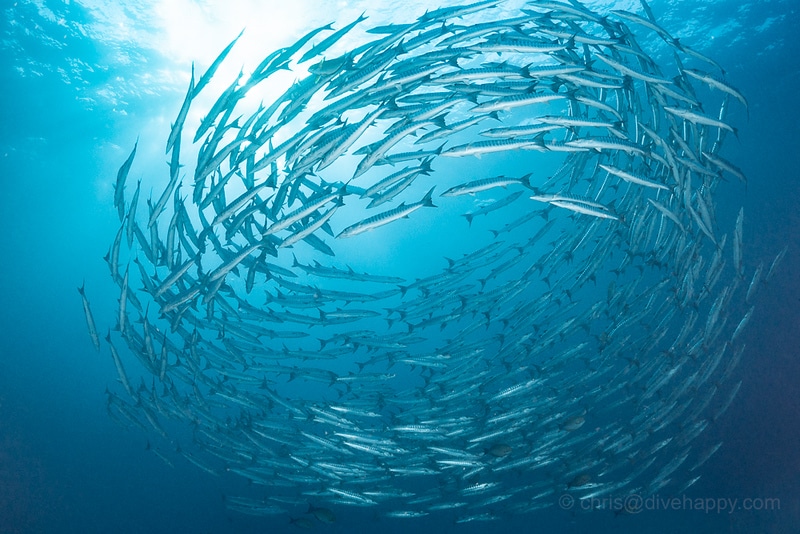
For wide-angle lovers, the famous barrel sponge and large coral bommie is often a major draw. And with a bit of luck the schooling barracuda in the clear waters can provide that Similan shot of a lifetime. Equally on the dive site there is a plethora of macro life, from nudibranchs on the bommie, gobies, blennies and so much more in the sand and hidden away on the reef.
Briefing
The Three Trees is the northern part of the Similan dive site, Breakfast Bend which runs along the eastern side of Island Nine. We give it the name Three Trees after three iconic trees which stand out from the jungle on the island. Their bleached white trunks are easy to spot and they are essential to locate as this is our jump-in area.
After rolling into the water we use the trees as reference to locate the first part of this dive site, the three large boulders located in an easterly direction out over the sand. We will save the reef for later, swimming out over the sand we first come to a huge coral bommie, one of the largest in Similan Islands. This is a great place to look for nudibranchs, shrimps and crevice dwellers. Quite often in the lee of any water movement you will come across a Kuhl’s stingray or two in the sand so be careful not to disturb them as you make your way around the structure.
Swimming to the boulders we then pass by a couple of sea fans that are very close to our hearts. Back in 2018 we came across the fans at the start of the season, heavily damaged and pulled over lying flat in the sand. We contacted our friends at the Marine Park and the DMCR (Department of Marine Coastal Resources) who then joined us on our following trip to rescue them. You can read about our adventures rescuing the fan in our blog-post. We always stop to have a little look and check the health of them, until now we are proud to say, “still standing and going strong“.
We now get to the outermost part of the reef with the three huge boulders and the famous giant barrel sponge. Barrel sponges are apparently slow growing but no one seems to have mentioned this to our sponge. Each year it continues to grow and takes pride of place in between the rocks. The life in this area seems to revolve or situate itself around the sponge.
Around this time we will start to be nearing our 10 min NDL time or maybe a few divers are near 100 bar, so we can slowly make our way back over the sand and pick up the reef. We will need to watch out for any currents and possibly adjust our direction as we swim. The sandy bottom is teeming with gobies and other critters so be careful with your buoyancy and your fins. Quite often as we hit the edge of the reef we will come across big tuna or schools of barracuda.
For the rest of the dive we can drift along the shallow sloping coral reef. The reef bottoms out at around 15m depth so it’s perfect for the latter part of our dive. If you are keen to spot a turtle, head to the top of the reef which is around 10m depth and drift along. We frequently see hawksbill turtles here.
Fish and Other Species Found at Three Trees
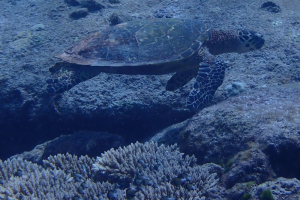
Hawksbill Turtle
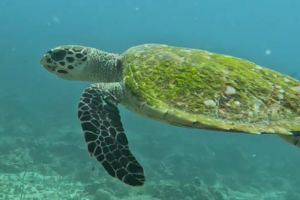
Hawksbill Turtle
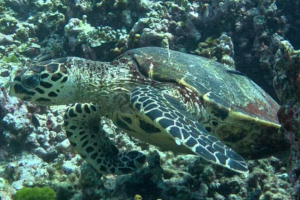
Hawksbill Turtle
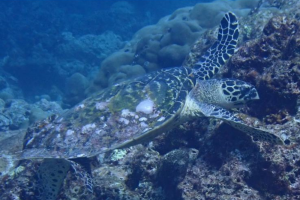
Hawksbill Turtle
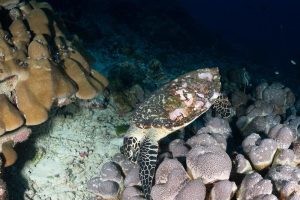
Hawksbill Turtle
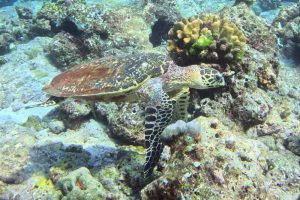
Hawksbill Turtle

Hawksbill Turtle
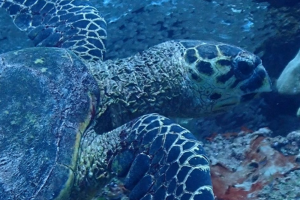
Hawksbill Turtle
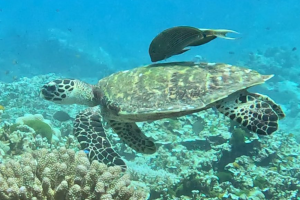
Hawksbill Turtle