
Departed
Returned
Departs From
Khao Lak, Thailand
Dives
14 dives


Similan Liveaboard Trip BB2603 Turtle Conservation Special
MV Blue Dolphin – Our First Living Blue Adventure
Four days of diving, some familiar turtles, a few new discoveries and plenty of good company.
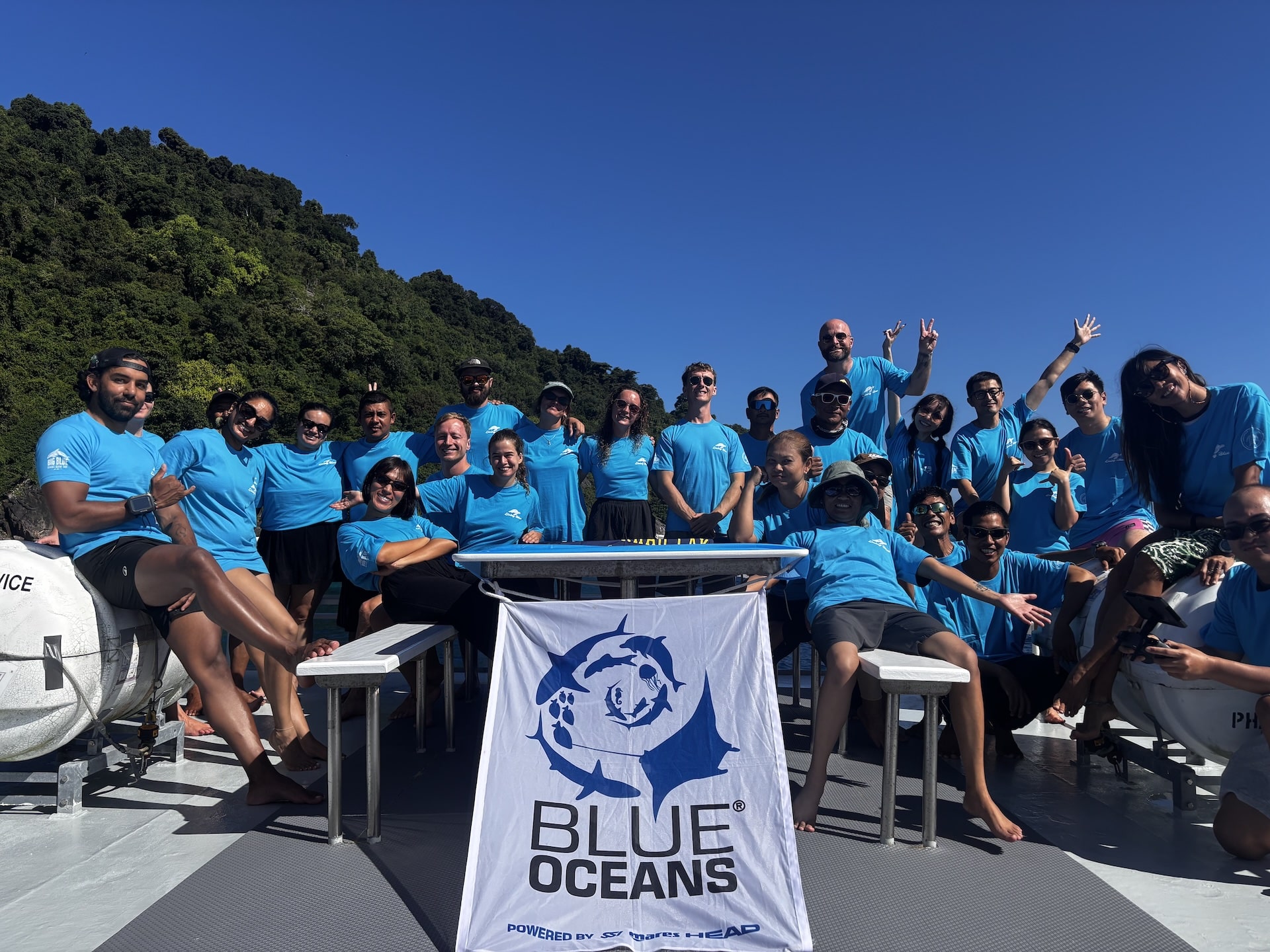
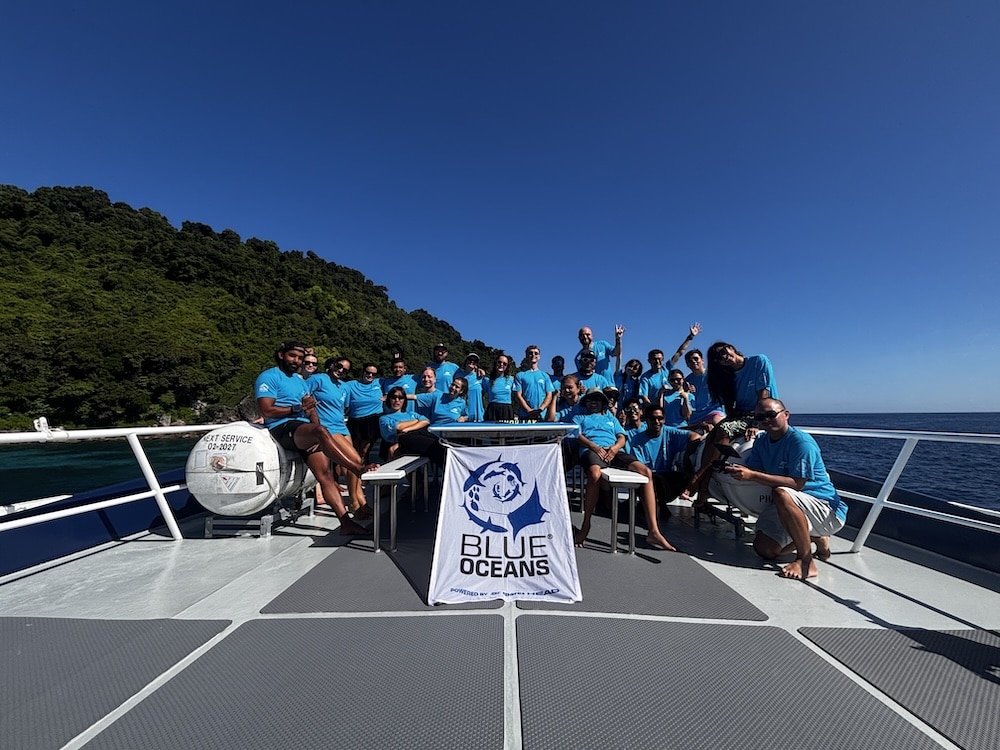
Firstly, a big thank you to everyone who joined us for our first Living Blue liveaboard aboard MV Blue Dolphin.
This was something we’d been looking forward to for quite a while, and it was great to finally get everyone together onboard.
As I explained at the beginning of the trip, Living Blue is really about connecting the diving we all love with the people and projects working to understand and protect our marine environment.
We wanted to make it interesting, enjoyable and hopefully give everyone a little more to take away from their diving.
And judging by the conversations, questions and enthusiasm throughout the trip, I think we’ve made a pretty good start.
For me personally, this was also a slightly different cruise.
I was dry this trip, meaning onboard but not diving, which isn’t something I’m particularly used to.
As much as I always love being in the water, watching everyone return from their dives with stories, photographs, questions and huge smiles was somehow a different but equally satisfying buzz.
And there was plenty to talk about.
Day 1 – Similan Islands, Turtles and a Stormy Evening
We started our diving around the Similan Islands, with Hideaway Bay giving everyone the chance to settle in, get comfortable and begin exploring.
Eve also introduced everyone to Andaman Turtle Watch, explaining the project and how ordinary divers can contribute to turtle research through photographic identification and citizen science.
And it didn’t take long before we had something rather special to work with.
A Very Rare Male Hawksbill at Shark Fin Reef
At Shark Fin Reef, Alex’s group encountered an adult male hawksbill turtle.
Now, seeing a hawksbill is always lovely, but this particular encounter was something rather special.
According to the Andaman Turtle Watch records, this was only the fourth sighting of a male hawksbill in a database containing more than 1,000 turtle sightings!
That’s a pretty remarkable statistic, and it certainly brought home just how unusual this encounter was.
We managed to obtain identification photographs of one side of his face, allowing Eve to add him as a new individual to the one-sided identification catalogue.
We still need photographs of the other side to complete his identification, so hopefully we’ll encounter him again in the future.
For me, this was a perfect example of what Living Blue is all about. A wonderful diving encounter becomes something more when the photographs and observations can contribute to a longer-term research project.
Not a bad start to our first Living Blue trip!
Some Familiar Faces at West of Eden
West of Eden brought us another couple of lovely turtle encounters.
Sam and Alex’s group spotted Mellow (0062), an adult female hawksbill already known to Andaman Turtle Watch.
And then we had a visit from a very familiar face.
Anakin!
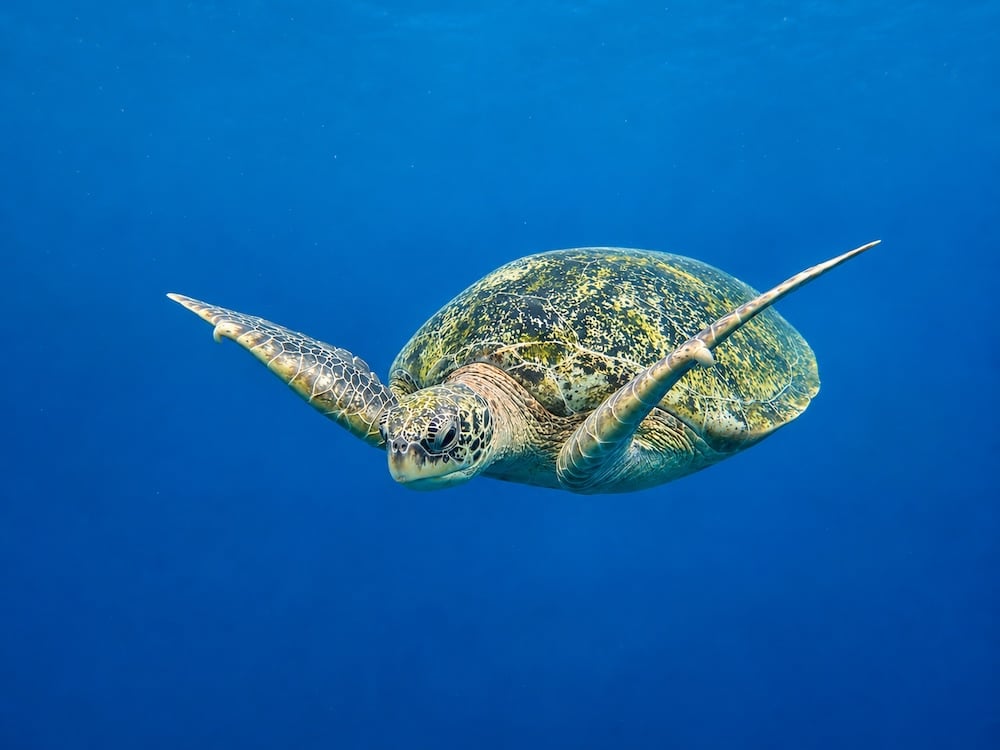
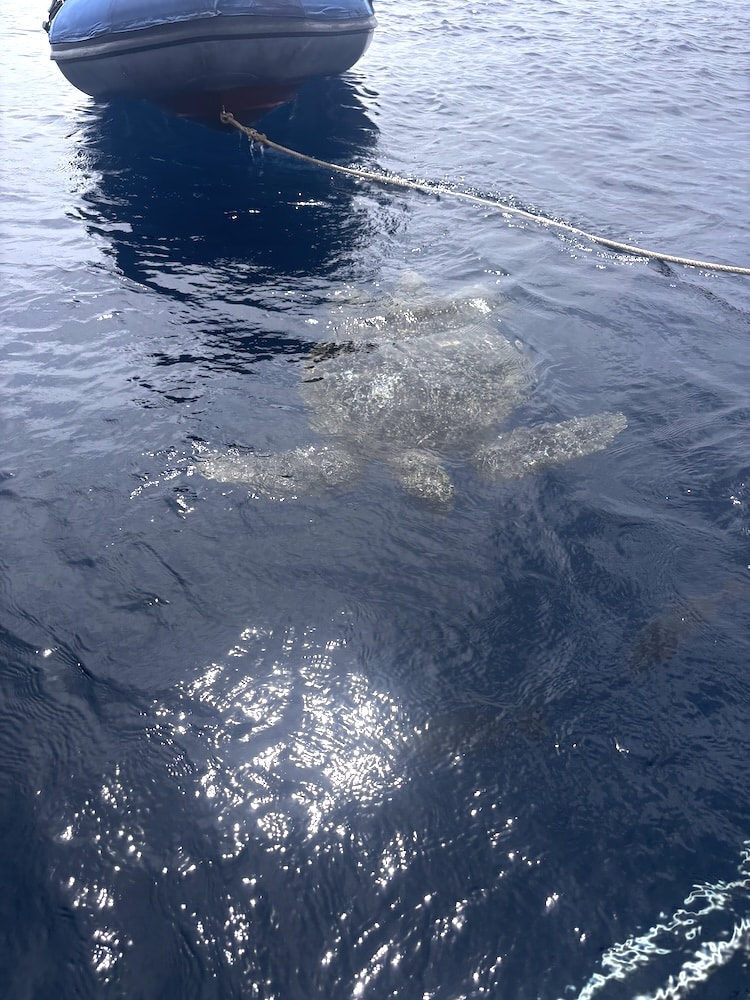
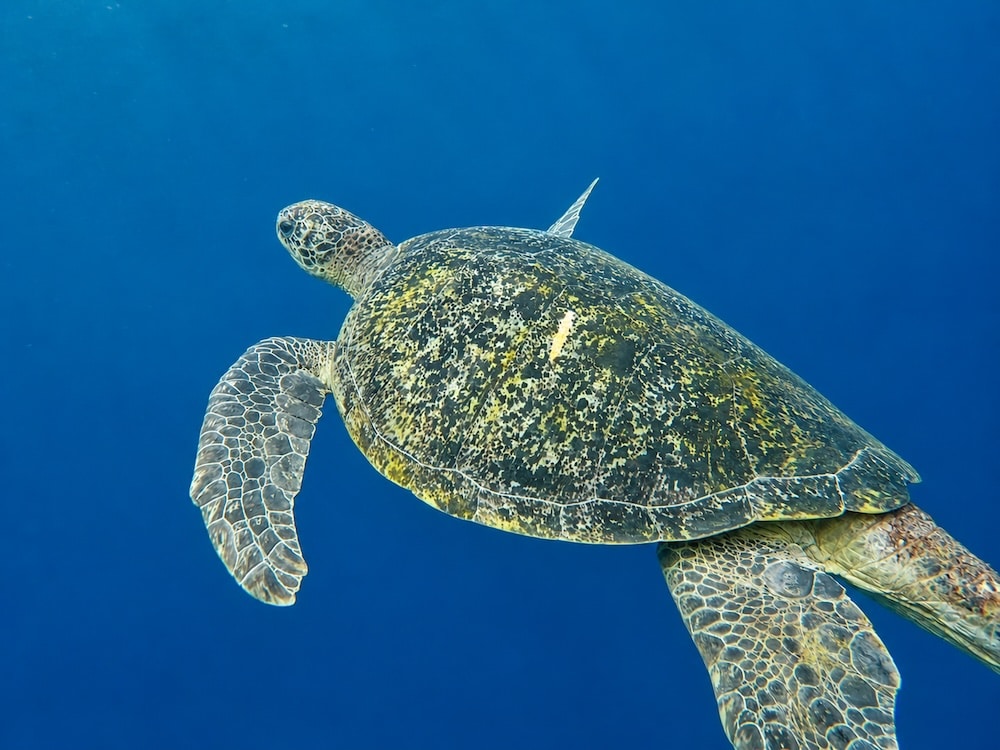
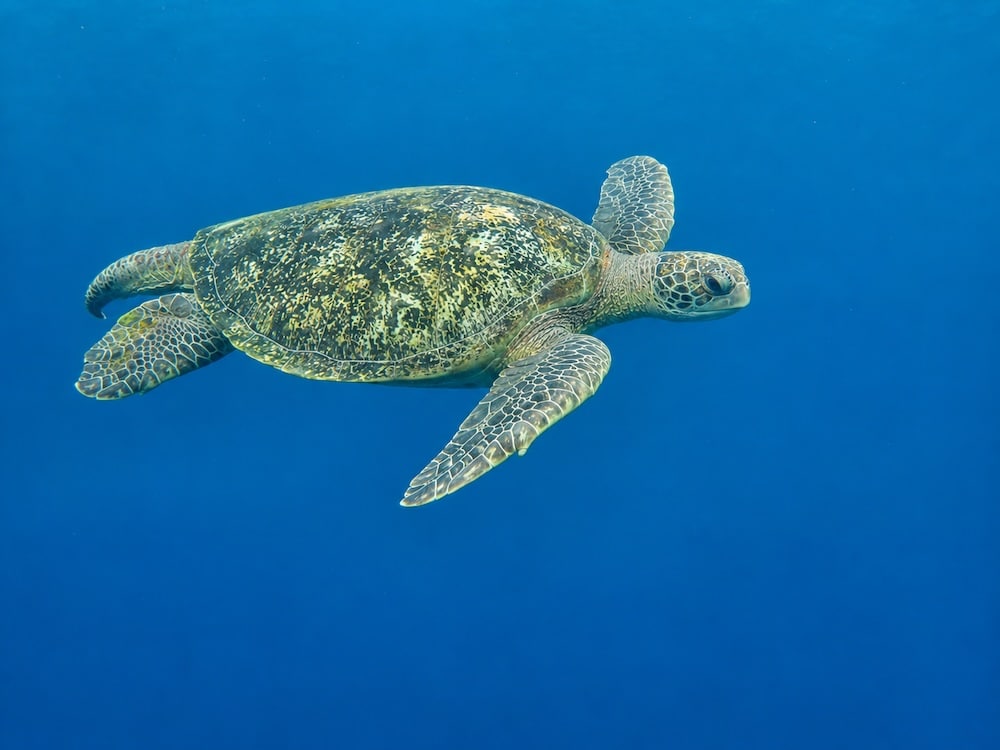
Anakin (0004), an adult male green turtle, appeared at the back of the boat, giving everyone a chance to see him.
Unfortunately, he was sporting a new, relatively minor injury to his carapace, or shell. From its appearance, it may have been caused by a boat propeller, although we can’t say for certain.
Thankfully, the injury appeared superficial rather than anything too serious.
I managed to jump in for a snorkel and get some photographs, which will be useful for keeping track of him and checking on how the injury heals in future sightings.
It’s encounters like this that really bring the value of turtle identification home.
These aren’t just anonymous turtles passing through. We’re beginning to recognise individuals, build up their histories and learn a little more about their lives.
And sometimes, as with Anakin, that means being able to monitor their health and recovery over time.
Will Drops By and a New Turtle Gets a Name
Our turtle encounters weren’t finished yet.
While we were at Donald Duck Bay, Similan Island 8, another familiar turtle appeared swimming around the back of the boat.
This time it was Will (0009), another individual already recorded in the Andaman Turtle Watch database.
With the whole boat getting a chance to enjoy these encounters, it was becoming quite a turtle-filled day.
And then came the night dive at Turtle Rock.
Sam’s group encountered a new subadult green turtle resting on the reef. Its gender couldn’t be determined, but it was another new individual to add to the records.
And of course, a new turtle needs a name.
Sam’s team came up with the rather wonderful “Turtle Eclipse of the Heart“, with the new green turtle also being called “Dugong“.
I think it’s fair to say the naming process is becoming almost as entertaining as the encounters themselves!
But behind the fun, there’s a genuinely useful purpose. Giving these turtles identities helps us recognise them again, track where they’re being seen and gradually build a picture of their movements and lives.
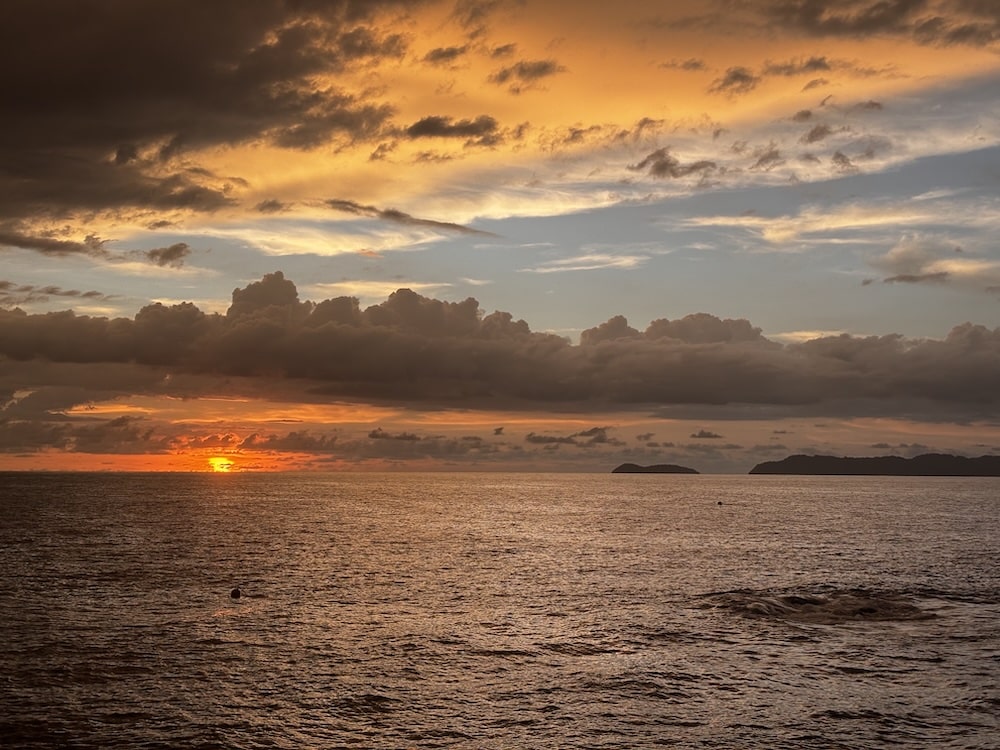
A Stormy Evening in the Similans
And what an evening it was.
We had some pretty impressive storms rolling through, with lightning illuminating the sky around us.
Thankfully, Donald Duck Bay provided the perfect shelter, and we were able to enjoy the show from the comfort of the boat.
After a day of extraordinary turtle encounters, it was quite a spectacular way to finish our first day.
Day 2 – North Point, Beacon Reef and Koh Bon
Our second day took us to North Point and Beacon Reef before heading north to Koh Bon for two dives.
And yes, the turtles were still keeping everyone busy!
Levi at North Point
At North Point, Sam and Farm’s group encountered Levi (0018), a subadult hawksbill turtle already known to Andaman Turtle Watch.
Levi was swimming and feeding in the current, going about his normal business while the divers enjoyed the encounter.
I particularly like these sorts of sightings because they give us a glimpse of the animals behaving naturally in their own environment.
For turtle research, it’s not just about finding new individuals. Repeated sightings of turtles we already know are equally valuable, helping build up information about where they spend their time and how they use different areas of the reef.
Beacon Reef and Koh Bon
Beacon Reef is particularly interesting for its hard coral formations and shelves, which give the site a very different feel from some of the Similans’ larger granite boulder sites.
From there we continued to Koh Bon, a site that’s always been special to us, particularly because of its history of manta ray encounters.
Although mantas have become much less frequent visitors in recent years, Koh Bon remains a fascinating place to dive.
Having Jamie onboard gave us an opportunity to talk more about manta research and the importance of recording sightings, even when the animals themselves aren’t around.
Understanding where animals are no longer being seen can sometimes be just as important as recording where they are.
Day 3 – Surin Islands, Richelieu Rock and a First for Turtle Watch
Day three took us further north, starting with a dive at Ao Suthep in the Surin Islands.
It’s always a privilege to visit Suthep.
For me, it’s one of Thailand’s greatest coral reef systems, and a wonderful reminder of just how special the Surin Islands are.
From there we headed to Richelieu Rock for three dives.
With relatively few boats around, I had a feeling everyone might be in for a treat.
And from what I heard when you all returned, it sounded like one of those Richelieu days.
Anyone who’s spent time diving Richelieu will know exactly what I mean.
But alongside the diving, we had another particularly exciting moment for Living Blue.
A Rare Turtle at Richelieu Rock – Meet Muse!
Nina’s group encountered a hawksbill turtle at Richelieu Rock.
Now, that might not sound particularly unusual when we’ve already been talking about so many turtles, but Richelieu is a very different story.
Turtles are actually exceptionally rare at this dive site.
According to the Andaman Turtle Watch notes, this was only the fifth recorded turtle sighting at Richelieu Rock, within a database containing more than 1,000 sightings overall.
And even better, this was a completely new individual.
Unlike our male hawksbill at Shark Fin Reef, we managed to obtain a complete photographic identification for this turtle.
And Nina had the honour of giving our new arrival a name.
Muse!
A lovely name for a rather special turtle.
For Eve, this was an especially exciting moment. Recording a new individual at a location where turtles are so rarely encountered is exactly the sort of contribution we’d been hoping to make during this trip.
And I think it’s fair to say Eve’s enthusiasm was absolutely infectious.
There’s something wonderful about seeing someone get so genuinely excited about a turtle photograph.
That’s one of the things I enjoyed most about having Eve onboard. Her enthusiasm makes you realise that what might seem like a fairly ordinary sighting to one person can be genuinely valuable to someone trying to build a better understanding of these animals.
We’d already had some wonderful turtle encounters in the Similans, including our rare male hawksbill, several familiar individuals and a new green turtle at Turtle Rock.
Now we had Muse, our first turtle identification from Richelieu Rock, to add to the story.
A pretty fantastic result for our first Living Blue cruise, and a wonderful high to finish our time at Richelieu Rock.
Day 4 – Koh Tachai
Our final day brought us to Koh Tachai for two dives.
Koh Tachai is another of those sites that can be absolutely spectacular when conditions are right.
Its exposed location, currents and underwater topography make it a very different experience from the more sheltered reefs around the islands.
A Little More Than Just Diving
Of course, the diving was only part of what made this trip different.
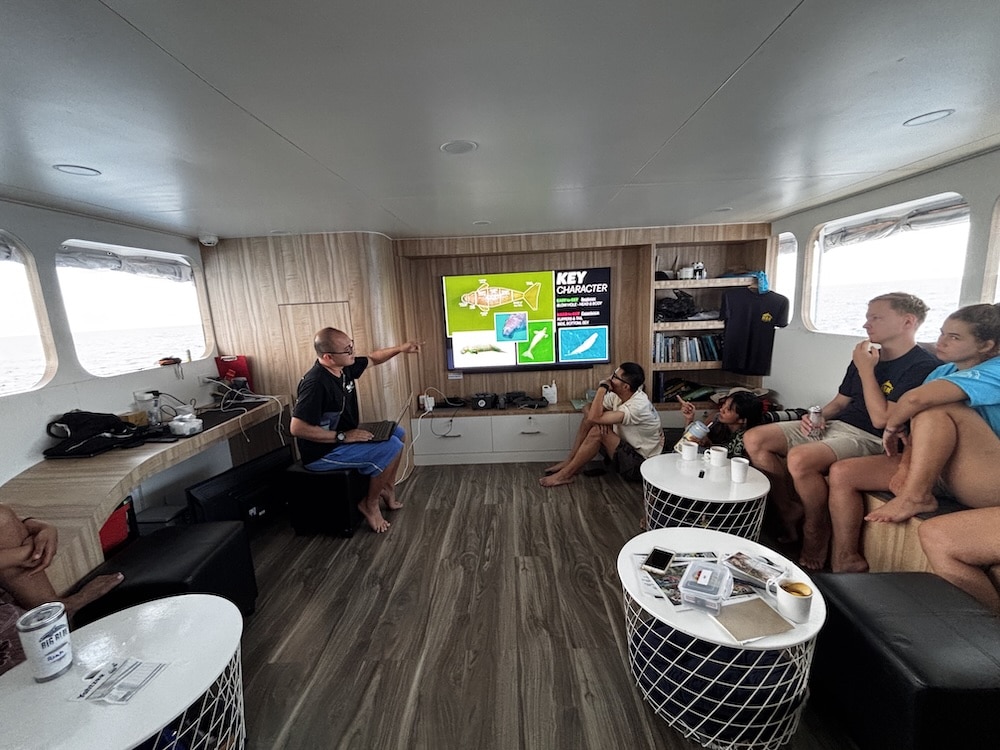
Throughout the cruise, we had the opportunity to hear from Jamie, Pop and Eve about their work.
Jamie shared her knowledge of manta rays and the Thailand Manta Project, helping us understand how identification photographs and sighting records contribute to research.
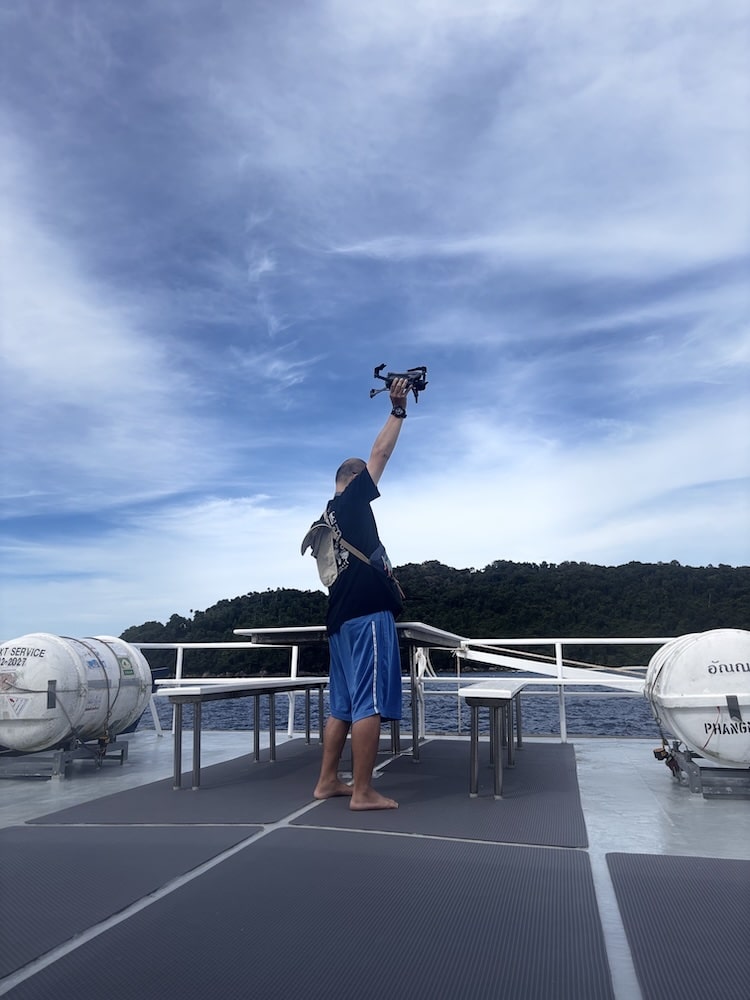
Pop gave us a fascinating look at his work with Thailand’s dugongs, including Miracle, and how drone technology can help researchers observe marine animals from a completely different perspective.
And Eve introduced everyone to Andaman Turtle Watch, explaining how we can recognise individual turtles and contribute our own sightings.
What I really enjoyed was seeing those ideas carry over into the diving.
Seven Turtle Encounters and Some Really Useful Records
Looking back over the cruise, we recorded seven particularly interesting turtle encounters:
- Shark Fin Reef: A new adult male hawksbill, only the fourth male hawksbill sighting in the database. A partial, one-sided identification.
- West of Eden: Anakin (0004), an adult male green turtle, with a new minor injury to his carapace.
- West of Eden: Mellow (0062), an adult female hawksbill.
- Donald Duck Bay: Will (0009), another familiar turtle visiting the back of the boat.
- Turtle Rock: A new subadult green turtle, nicknamed Dugong and given the rather wonderful name Turtle Eclipse of the Heart.
- North Point: Levi (0018), a subadult hawksbill observed swimming and feeding in the current.
- Richelieu Rock: Muse, a newly identified hawksbill and an exceptionally rare turtle encounter for this dive site.
That’s a lovely collection of encounters for four days of diving.
But what’s particularly encouraging is that these weren’t simply seven turtles we happened to see.
We were able to recognise known individuals, photograph new ones, document an injury and contribute new information to an ongoing research project.
And that’s really the point.
Every identification photograph, every location record and every repeat sighting helps build a little more knowledge.
Individually, these contributions might seem quite small.
But when you start bringing them together, particularly over many years and with more divers contributing, they become something much more useful.
It’s exactly the sort of thing we hoped Living Blue would encourage.
And perhaps just as importantly, I loved hearing the conversations continuing long after the presentations had finished.
Over meals, between dives and during the evenings, there was always something being discussed.
It was great to see everyone taking such an interest.
Thank You for Being Part of Our First Living Blue Cruise
This was our first attempt at bringing Living Blue into the liveaboard experience, and we’re already thinking about what worked, what we can improve and where we’d like to take it next.
I really appreciate everyone being part of that first step.
A special thank you to Jamie, Pop and Eve for sharing their time and knowledge, and to our Blue Dolphin crew for looking after everyone throughout the trip.
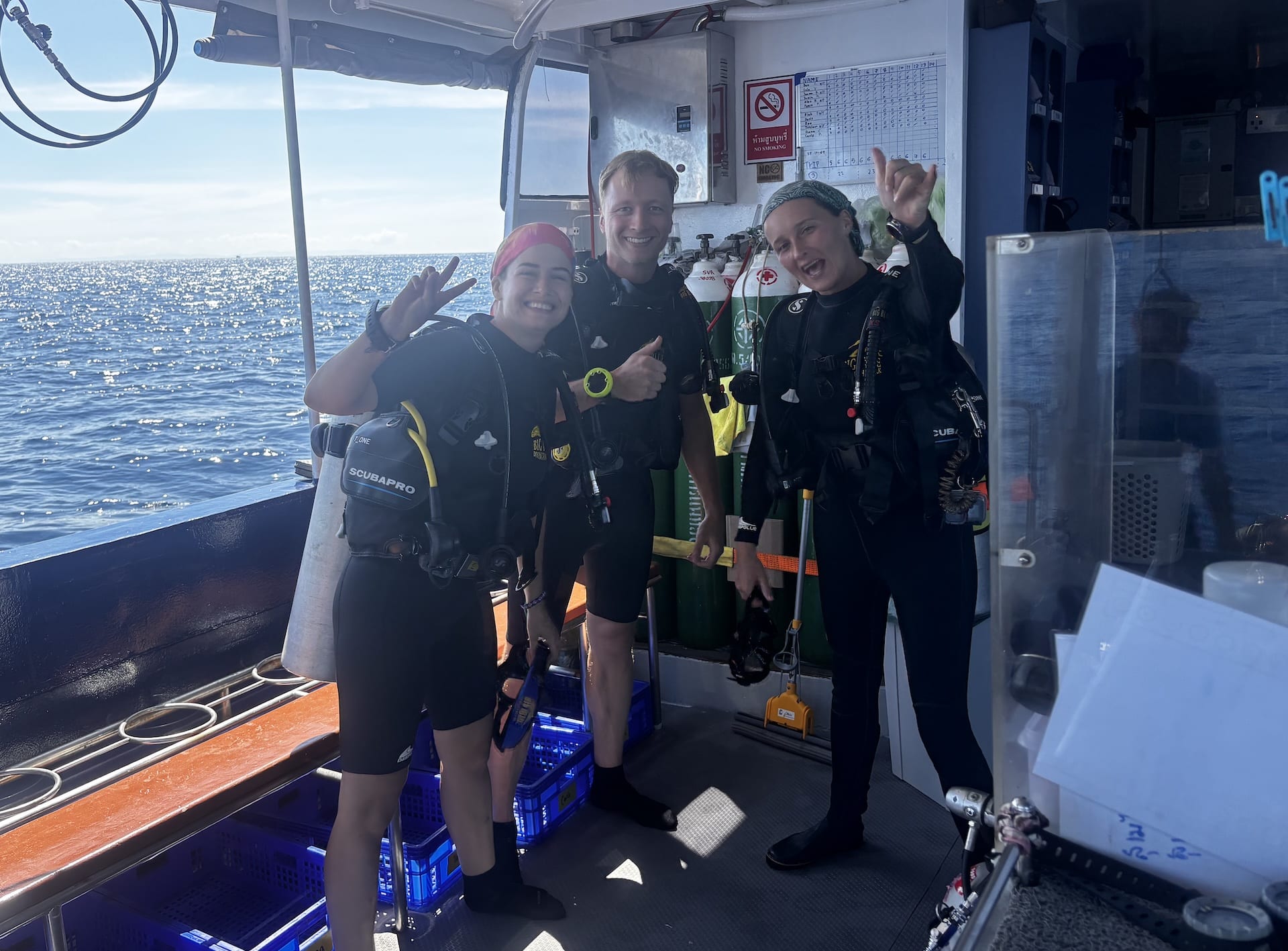
And a thank you to Alex, Sam, Farm, Nina and all the diving groups who helped photograph and record these turtle encounters.
It’s lovely to see everyone getting involved, and it really does make a difference.
To all of you who joined us, thank you for the enthusiasm, the questions, the photographs and the company.
I hope you enjoyed the experience as much as we enjoyed putting it together.
Let’s Keep in Touch
One thing I’d really like is for Living Blue to continue beyond the trip itself.
If you’ve got photographs of turtles, mantas or anything unusual from the cruise, please keep sharing them with us.
We’re particularly interested in any additional turtle identification photographs, especially those that might help us complete the identification of our rare male hawksbill from Shark Fin Reef.
And of course, if you happen to meet Anakin, Mellow, Will, Levi, Muse or any of our other familiar turtles on future dives, we’d love to hear about it.
We’ll also keep everyone updated on the projects we’re supporting and any future Living Blue activities.
And if you’ve got suggestions, ideas or feedback about the trip, I’d genuinely love to hear them.
We’re always looking for ways to make these experiences better, and the people who joined our first cruise are in a particularly good position to help us shape what comes next.
Thanks again for being part of it.
Hopefully we’ll see you all back onboard before too long.
Living Blue – Keep exploring, keep learning and keep looking after the ocean.
Keep up with our Similan Liveaboard trips on Instagram
Google Reviews
Read our reviews on Google Maps or leave your own there
Trip Advisor
Please leave us a review on Trip Advisor or read what others say about us