Big Blue Marine Species Information

Hawksbill Turtle

The Hawksbill Turtle (Eretmochelys imbricata) is a critically endangered marine reptile distinguished by its distinctive hawk-like beak and beautifully patterned shell. These medium-sized sea turtles inhabit tropical coral reefs worldwide, where they play a crucial ecological role as sponge specialists. With overlapping scutes creating their characteristic tortoiseshell pattern, hawksbills have been historically exploited for commercial purposes. As long-lived reptiles reaching sexual maturity after 20-30 years, they face significant conservation challenges due to their slow reproductive rate and declining nesting beaches globally.

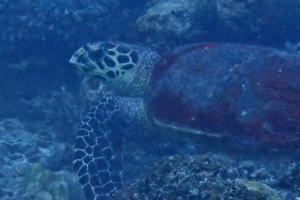
Brian

Brian is a hawksbill turtle (ID #0032) first spotted in January 2025. This sub-adult turtle has been sighted 2 times, contributing valuable data to our Andaman Sea conservation database through the Andaman Turtle Watch partnership.
Read More Information »

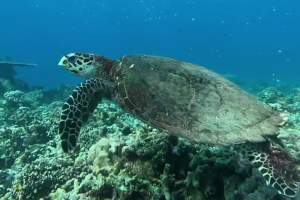
Sea Bailey

Sea Bailey is a hawksbill turtle (ID #0035) first spotted in January 2025. This sub-adult turtle has been sighted 2 times, contributing valuable data to our Andaman Sea conservation database through the Andaman Turtle Watch partnership.
Read More Information »

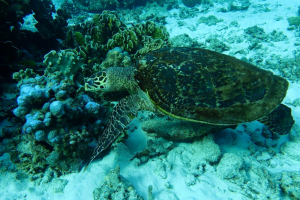
Leah

Leah is a hawksbill turtle (ID #0036) first spotted in January 2025. This sub-adult turtle has been sighted 6 times, contributing valuable data to our Andaman Sea conservation database through the Andaman Turtle Watch partnership.
Read More Information »

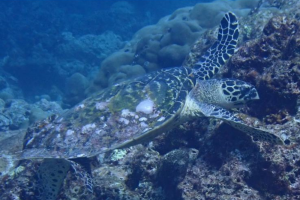
Aurora

Aurora is a hawksbill turtle (ID #0037) first spotted in February 2025. This sub-adult turtle has been sighted only once, contributing valuable data to our Andaman Sea conservation database through the Andaman Turtle Watch partnership.
Read More Information »

Lenore

Lenore is a hawksbill turtle (ID #0038) first spotted in February 2025. This sub-adult turtle has been sighted 3 times, contributing valuable data to our Andaman Sea conservation database through the Andaman Turtle Watch partnership.
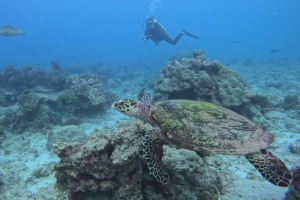
Read More Information »

Andy

Andy is a hawksbill turtle (ID #0042) first spotted in February 2025. This sub-adult turtle has been sighted 7 times, contributing valuable data to our Andaman Sea conservation database through the Andaman Turtle Watch partnership.
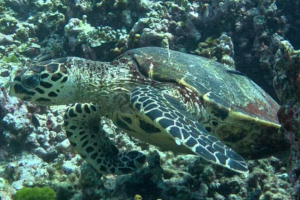
Read More Information »

Palpatine

Palpatine is a hawksbill turtle (ID #0044) first spotted in January 2025. This sub-adult turtle has been sighted 3 times, contributing valuable data to our Andaman Sea conservation database through the Andaman Turtle Watch partnership.
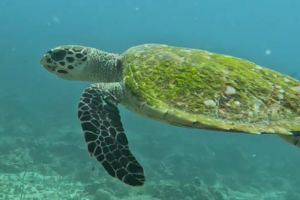
Read More Information »

Donatello

Donatello is a hawksbill turtle (ID #0050) first spotted in March 2025. This sub-adult turtle has been sighted 3 times, contributing valuable data to our Andaman Sea conservation database through the Andaman Turtle Watch partnership.
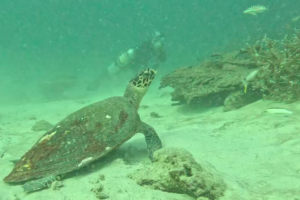
Read More Information »

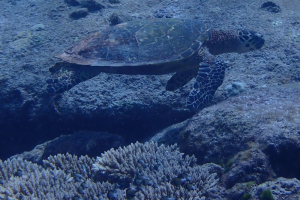
Nelly Noo

Nelly Noo is a hawksbill turtle (ID #0052) first spotted in March 2025. This sub-adult turtle has been sighted 2 times, contributing valuable data to our Andaman Sea conservation database through the Andaman Turtle Watch partnership.
Read More Information »

Champ

Champ is a hawksbill turtle (ID #0053) first spotted in January 2024. This sub-adult turtle has been sighted 4 times, contributing valuable data to our Andaman Sea conservation database through the Andaman Turtle Watch partnership.

Read More Information »
Introduction

The Hawksbill Turtle (Eretmochelys imbricata) is one of the world’s most distinctive and critically endangered sea turtle species. Named for their sharp, curved beak resembling a bird of prey, these remarkable marine reptiles are instantly recognizable by their stunning carapace pattern of overlapping scutes in amber, brown, and golden hues that create the famous “tortoiseshell” appearance.

Hawksbills are medium-sized sea turtles, typically measuring 60-90 cm in carapace length and weighing 40-80 kg as adults. Their flippers are proportionally longer than other sea turtle species, adapted for maneuvering through complex coral reef environments. The species plays a vital ecological role in maintaining healthy coral reef ecosystems through their specialized feeding habits.

Unfortunately, hawksbills face severe threats from habitat loss, illegal trade, climate change, and marine pollution. They are listed as Critically Endangered by the IUCN, with global populations having declined by over 80% in recent decades. Conservation efforts worldwide focus on protecting nesting beaches, reducing bycatch in fisheries, and combating the illegal trade in tortoiseshell products.

Habitat

Hawksbill Turtles inhabit warm tropical and subtropical waters around the globe, showing strong site fidelity to specific foraging and nesting areas.

Depth Range: Primarily found in shallow waters from the surface to depths of 20 meters, though they can dive to 70 meters when necessary. Adults typically forage in areas less than 20 meters deep where coral reefs and sponge communities thrive.
Preferred Environments:
  • Coral reefs and rocky reef systems
  • Coastal areas with abundant sponge growth
  • Shallow lagoons and back-reef areas
  • Mangrove creeks and estuaries (juveniles)
  • Sandy and rocky nesting beaches

Environmental Conditions: Hawksbills prefer water temperatures between 20-30°C (68-86°F) and areas with good water clarity that support healthy coral reef ecosystems. Nesting beaches require specific conditions including appropriate sand temperature, minimal artificial lighting, and protection from predators and human disturbance.

Geographic Distribution:

Found in the Atlantic, Pacific, and Indian Oceans, with major populations in the Caribbean, Pacific islands, Southeast Asia, and the Red Sea. Key nesting regions include the Caribbean, Seychelles, Australia’s Great Barrier Reef, and scattered Pacific islands.

Feeding

Hawksbill Turtles are highly specialized feeders with dietary preferences that change significantly as they mature.

Juvenile Diet:
  • Small crustaceans and marine invertebrates
  • Algae and seagrass
  • Fish eggs and small fish
  • Jellyfish and other gelatinous organisms
  • Various planktonic organisms
Adult Diet:
  • Sponges (primary food source – up to 95% of diet)
  • Coral polyps and soft corals
  • Sea anemones and other cnidarians
  • Algae and marine plants
  • Occasionally fish, mollusks, and crustaceans
Feeding Behaviour:

Adult hawksbills are among the most specialized feeders in the sea turtle family, with their diet consisting primarily of sponges. Their sharp, pointed beak allows them to reach into small crevices and extract sponges from coral reef surfaces. This feeding behavior is crucial for reef health, as hawksbills help control sponge populations that might otherwise overgrow and smother corals.

They are selective feeders, often consuming sponges that are toxic to other marine animals. Their digestive system has adapted to process these chemically defended organisms safely. Hawksbills typically forage during daylight hours, using their excellent vision to locate preferred prey items within the complex three-dimensional structure of coral reefs.

Reproduction
Sexual Maturity: Hawksbill Turtles reach sexual maturity very late, typically between 20-40 years of age, making them particularly vulnerable to population declines.
Breeding Season: Nesting occurs year-round in tropical regions, with peak seasons varying by location. Most populations show 2-4 year intervals between breeding seasons for individual females.

Nesting Behaviour:

  • Females return to natal beaches to nest (natal homing)
  • Nesting occurs at night to avoid predators and heat
  • Multiple nests per season (typically 3-6 nests every 12-16 days)
  • Prefer small, isolated beaches with vegetation cover
  • Show strong site fidelity to specific nesting areas
Reproductive Process:

Mating occurs in shallow waters near nesting beaches during the breeding season. After mating, females come ashore at night to dig nests in sandy beaches above the high tide line. Each nest contains 100-200 ping-pong ball-sized eggs that are buried approximately 40-60 cm deep in the sand.

Incubation and Development: The incubation period lasts 52-74 days, depending on sand temperature. Like other reptiles, sex determination is temperature-dependent, with warmer temperatures producing more females. Hatchlings emerge at night and use natural light cues to find the ocean.

Larval Development: Newly hatched hawksbills enter a “swimming frenzy” phase, swimming continuously for 24-48 hours to reach offshore currents. They then enter the “lost years” phase, spending several years in the open ocean associated with floating sargassum seaweed before recruiting to nearshore coral reef habitats as juveniles.
Parental Care: Like all sea turtles, hawksbills provide no parental care after nesting. Females carefully select nesting sites and may use their flippers to camouflage nests, but hatchlings are entirely independent upon emergence. Success depends on environmental conditions, predation pressure, and human impacts on nesting beaches.

Hawksbill Turtle are in the same Genus as these Species: