
Big Blue Dive Site Guide
Elephant Head Rock
Day Trip Diving
Our Similan diving day trips will resume in November 2025
Liveaboard Diving
Location
1 km Southwest of Similan Island Eight
Skill Level
Advanced
Depth
0-45m
Currents
Weak to strong
Topography
Elephant Head is a stunning maze of massive granite boulders and one of the most iconic Similan Islands diving destinations, with structure both above and beneath the surface. The main pinnacles rise from the depths to break the surface and are surrounded by deeper outcrops and swim-throughs. The site gets its name from a rock formation on the surface that, from certain angles, resembles an elephant's head breaking through the waves as it swims in the sea.
Highlights
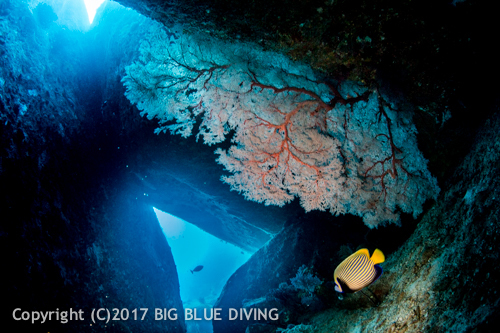
One of the Similan Islands' best dive sites, it's all about big, bold topography and thrilling dive conditions. Large swim-throughs and tight corridors offer an adventurous route through the boulders, often surrounded by schools of snapper, fusiliers, and trevally. moray eels, scorpionfish, and angelfish frequent the cracks, while the outer blue often holds surprises—like hunting barracuda, giant trevally, or even passing reef sharks and manta rays. It's a site that keeps you moving and constantly looking in every direction.
Tips
Elephant Head is best suited for confident divers with good buoyancy control due to the depth and unpredictable currents. Stick close to the boulders for protection and to discover hidden macro life. Don't miss the large arch swim-through at around 18–20m—it's a highlight of the site. Always be aware of your depth and monitor your air carefully as many parts of the site drop off steeply.
Photography
A favourite for wide-angle enthusiasts, the dramatic rock structures, natural light shafts, and schooling fish make for breathtaking compositions. Swim-throughs offer great silhouette shots, and there are plenty of opportunities for macro photography too, especially around the sheltered areas and cracks in the rock. A dive here easily justifies two dives with different lenses.

Briefing
As Elephant Head Rock is such a jumble of boulders, swim-throughs, and canyons, no one briefing will fit all dive groups for this dive. Each of our guides has their own route and favourite spots they like to show their divers. So apart from a few standard points, follow your guide and enjoy Elephant Head Rock’s stunning show.
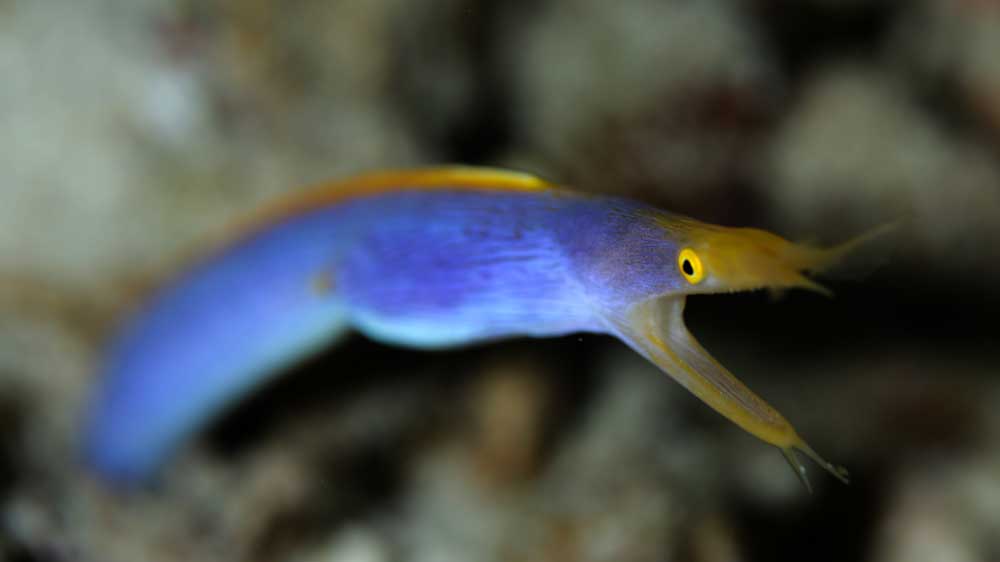
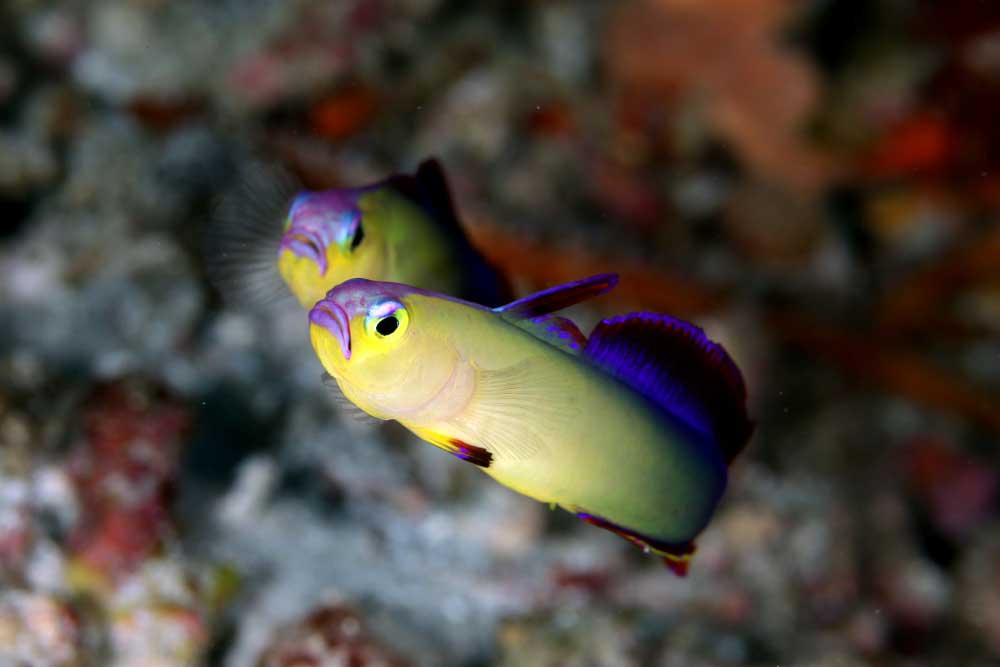
The easy entry to the dive site is on the southern side of the largest rock (the elephant’s head), to the eastern edge where a small cut into the rock offers the most protection both on the surface and in strong currents. Regardless of current direction, this will always provide the most protection when descending onto the site. We will descend a few metres, then a groove in the large rocks takes us down to around 16-18m where we can explore a few lively coral bommies, often surrounded by schools of snapper. It’s also a good area to look for ribbon eels, octopus, juvenile rock mover wrasse, and Andaman damselfish.
We will swim eastwards and then reach a large channel formed between two immense boulders. This is a great reference point for the start of the dive proper. From here your guide will lead you around the site heading in an anticlockwise direction. There’s plenty to see at all depths—amongst the rubble that makes up the bottom, under the rocks, in the swim-throughs, out into the blue, and also at the shallowest depths. Look out for tuna out in the blue, stalking the huge schools of fusiliers, and in the shallows where giant trevally patrol the surge looking for easy prey.
You will probably end the dive around to the north of the site. On your safety stop you may be instructed to swim a little away from the rocks for easier pick-up. Don’t worry where on the site you surface—our dinghies will be waiting to whisk you back to our liveaboard.