Introduction
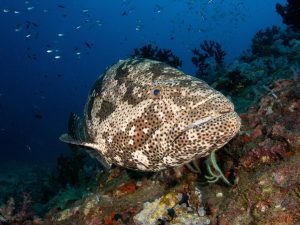
The Brown-Marbled Grouper (Epinephelus fuscoguttatus), also known as the Flowery Cod or Brown-Spotted Rockcod, is one of the most impressive members of the grouper family inhabiting Indo-Pacific coral reefs. This species is immediately recognizable by its robust, heavy-bodied build and distinctive pattern of numerous small dark brown to black spots densely covering a pale tan to greyish-white base colour, creating a marbled or mottled appearance that gives the species its common name.
These groupers are among the larger reef-dwelling predators, with adults commonly reaching 60-80 cm in length and exceptional specimens growing beyond one metre, weighing up to 100 kg. Their oversized mouth and powerful jaws are perfectly adapted for their role as ambush predators, capable of generating tremendous suction force to inhale prey in milliseconds. Like many groupers, they possess the remarkable ability to rapidly change their colour intensity and pattern to match their surroundings, signal mood, or communicate with other fish.
Brown-Marbled Groupers are both ecologically and economically important throughout their range. As apex predators, they play a crucial role in maintaining reef ecosystem balance by controlling populations of smaller fish and invertebrates. They are also highly valued in commercial and artisanal fisheries across Southeast Asia, and are increasingly popular in marine aquaculture due to their fast growth rates and market demand.